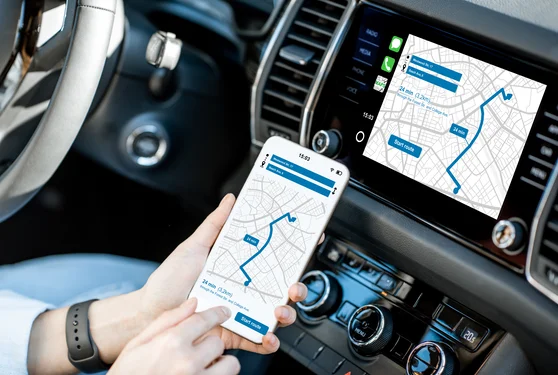
The transportation industry has been revolutionized by the advent of taxi booking apps. Gone are the days of hailing a cab on a street corner or waiting endlessly on a phone call. Today, a few taps on a smartphone can summon a ride, track its arrival in real-time, and process payments seamlessly. For entrepreneurs and existing taxi businesses looking to enter or expand in this dynamic market, developing a robust and intuitive taxi booking app is no longer an option, it's a necessity. But with numerous technologies and platforms available, choosing the best platforms for taxi booking app development can be a daunting task. This blog will explore the leading choices and guide you through the intricacies of building a successful ride-hailing app.
Introduction to Taxi Booking App Development
The rise of giants like Uber and Ola has demonstrated the immense potential of the on-demand taxi app market. These platforms have reshaped urban mobility, offering convenience, transparency, and efficiency that traditional taxi services simply couldn't match. As consumer expectations shift, businesses, both startups and established fleets, are realizing that a powerful taxi booking app is central to their growth strategy. It's about more than just booking a ride; it’s about creating a comprehensive ecosystem that connects riders, drivers, and administrators in real-time. Developing such an app requires careful consideration of technology, features, and user experience.

Why Invest in a Custom Taxi Booking App?
While white-label solutions exist, investing in custom web app development for your taxi business offers unparalleled advantages. A tailored solution means:
- Brand Building and Differentiation: A unique app allows you to establish your brand identity, integrate specific branding elements, and stand out in a crowded market. You're not just another clone; you're a distinct service.
- Scalability: Custom apps are built to scale with your business. As your fleet grows or your service expands to new regions, the app can seamlessly accommodate increased demand and new features without performance issues.
- Unique Features and Business Logic: You can incorporate specific features that cater to your niche market or address particular operational challenges. This could include unique pricing models, specialized vehicle types, or custom loyalty programs.
- Seamless Integration: A custom app can integrate flawlessly with your existing backend systems, CRM, payment gateways, and analytics tools, providing a cohesive operational environment.
- Enhanced Security: With a custom app development company, you have full control over security protocols, ensuring robust data protection and compliance with industry standards.
- Optimized Performance: Custom solutions are optimized for performance, leading to faster loading times, smoother navigation, and a more responsive user experience for both drivers and passengers.
Investing in custom taxi app development allows you to build a solution that truly embodies your business vision and provides a competitive edge.

Understanding the Core Components of a Taxi App
A typical taxi booking software is not a single application but rather a suite of interconnected platforms, including passenger apps, driver apps, and admin panels, all working together to ensure smooth bookings, real-time tracking, and efficient fleet management.
- Passenger App: This is the user-facing application for booking rides, tracking drivers, making payments, and providing feedback.
- Driver App: Used by drivers to accept/reject rides, navigate to pickup/drop-off locations, manage their availability, and track earnings.
- Admin Panel: A powerful web-based dashboard for the business owner or administrator to manage drivers, passengers, bookings, payments, pricing, promotions, and analytics.
- Dispatcher Panel (Optional): For businesses that still employ human dispatchers, this panel helps in assigning rides manually and managing the fleet.
All these components interact with a robust backend system that handles data storage, real-time communication, mapping services, and payment processing.

Native vs. Cross-Platform: Which Way to Go?
When considering mobile app development for a taxi app, a fundamental decision is between native and cross-platform approaches.
- Native App Development:
- iOS (Swift/Objective-C): Building a native iOS app offers superior performance, tighter integration with Apple's ecosystem, and access to the latest iOS features. It’s ideal for providing an optimized experience for iPhone users.
- Android (Kotlin/Java): Native Android development ensures optimal performance, access to device-specific features, and adherence to Android's design guidelines.
- Pros: Best performance, access to all device features, highly responsive UI/UX.
- Cons: Higher development cost and time (two separate codebases), requires specialized developers for each platform.
- Cross-Platform App Development:
- React Native: A popular JavaScript framework for building native mobile apps for both iOS and Android from a single codebase. It's known for its faster development cycles and "learn once, write anywhere" philosophy.
- Flutter: Google's UI toolkit for building natively compiled applications for mobile, web, and desktop from a single codebase. Flutter is praised for its expressive UI and excellent performance.
- Xamarin: A Microsoft-owned framework for building cross-platform apps with C#. It's often favored by businesses already in the Microsoft ecosystem.
- Pros: Faster development, cost-effective (single codebase), wider audience reach with less effort.
- Cons: May have limitations in accessing certain native device features, performance might be slightly lower than pure native for very complex animations or heavy computations.
For taxi booking app development, a cross-platform approach like React Native or Flutter is often preferred due to its ability to reach both iOS and Android users quickly and cost-effectively, without significantly compromising on performance for a typical ride-hailing application.

Top Platforms for Backend Development
The backend is the brain of your taxi booking app, handling all the logic, data, and real-time communication. Choosing the right technologies is crucial for scalability and reliability.
- Programming Languages & Frameworks:
- Node.js (with Express.js): Highly popular for real-time applications like taxi apps due to its asynchronous, event-driven architecture. It's excellent for handling multiple concurrent connections efficiently.
- Python (with Django/Flask): Known for its readability and rapid development capabilities. Django provides a robust framework for complex web applications, while Flask is suitable for smaller, more flexible backends.
- Java (with Spring Boot): A mature and highly scalable choice, especially for enterprise-grade applications requiring high performance and robust security.
- Ruby on Rails: Excellent for rapid prototyping and has been used by many successful startups for its convention-over-configuration philosophy.
- Databases:
- NoSQL Databases (e.g., MongoDB, Firebase Realtime Database): Ideal for managing the flexible and rapidly changing data typical of real-time applications, such as driver locations, ride statuses, and user profiles. MongoDB offers high scalability and flexibility.
- Relational Databases (e.g., PostgreSQL, MySQL): Still relevant for structured data, like user accounts, payment transaction history, and detailed ride logs where data integrity and complex queries are paramount. PostgreSQL is a powerful open-source choice.
- Mapping & Geolocation Services:
- Google Maps API: The industry standard, offering comprehensive mapping, navigation, real-time traffic data, and location-based services. Essential for accurate pickup/drop-off, route optimization, and live tracking.
- Mapbox: A customizable alternative that provides more control over map styling and advanced geolocation features.
- Cloud Platforms:
- AWS (Amazon Web Services): Offers a vast array of scalable services including EC2 for computing, S3 for storage, Lambda for serverless functions, and various database options.
- Google Cloud Platform (GCP): Known for its strong AI/ML capabilities and robust infrastructure, ideal for data analytics and predictive features.
Microsoft Azure: A popular choice for enterprises, offering seamless integration with Microsoft technologies and a comprehensive suite of cloud services.

Essential Features for Your Taxi App
A successful taxi booking app must offer a seamless and feature-rich experience across all its user panels.
- Passenger App Features:
- Easy Registration/Login: Via email, phone number, or social media.
- GPS-based Location Detection & Manual Entry: Accurate pickup/drop-off.
- Ride Request & Booking: Instant or scheduled rides.
- Vehicle Type Selection: Economy, premium, SUV, shared rides, etc.
- Fare Estimation: Transparent pricing before booking.
- Real-time Driver Tracking: Live map view of the driver's location.
- Multiple Payment Options: Cash, credit/debit cards, digital wallets (e.g., Google Pay, Apple Pay, Stripe integration).
- In-app Chat/Call with Driver: For seamless communication.
- Ride History & Receipts: For easy tracking of past trips.
- Ratings and Reviews: For both drivers and passengers, fostering accountability.
- SOS/Emergency Button: For safety during rides.
- Promo Codes & Discounts: For attracting and retaining users.
- Driver App Features:
- Driver Registration & Document Upload: Including license, vehicle details, and background checks (often verified by admin).
- Online/Offline Status: Toggle availability for rides.
- New Ride Request Alerts: With pickup/drop-off details and estimated fare.
- In-app Navigation: Optimized routes (integrated with Google Maps/Mapbox).
- Earnings Tracker: Daily, weekly, monthly summaries.
- Ride History: Record of completed trips.
- Passenger Ratings: To rate riders.
- Push Notifications: For new requests, cancellations, and important updates.
- Admin Panel Features:
- Dashboard & Analytics: Overview of operations, bookings, earnings, and user activity.
- Driver & Passenger Management: Onboarding, verification, blocking, support.
- Fleet Management: Vehicle types, status, maintenance tracking.
- Fare & Commission Management: Dynamic pricing, surge pricing, promotional offers.
- Dispute Resolution & Support: Handling issues, managing feedback.
- Payment & Payout Management: Tracking transactions, driver payouts.
- CMS for Content: Managing FAQs, terms & conditions.
Real-time Tracking: Monitoring all active rides and driver locations.

Why Choose Mobility Infotech for Your Taxi App Development?
Developing a sophisticated taxi booking app requires not just technical prowess but also a deep understanding of the ride-hailing industry and user behavior. This is where Mobility Infotech excels as a leading custom web app development company.
At Mobility Infotech, we don't just build apps; we engineer comprehensive mobility solutions designed for your specific business goals. Here's why partnering with us gives you a distinct advantage:
- End-to-End Expertise: From initial consultation and market research to UI/UX design, custom web app development, deployment, and ongoing maintenance, we offer a full spectrum of services. We guide you through every step, ensuring a seamless and efficient development process.
- Proven Track Record: We have a rich portfolio of successful mobile app development projects, including complex on-demand taxi app solutions. Our experience translates into faster development cycles and robust, bug-free applications.
- Cutting-Edge Technology Adoption: We stay abreast of the latest technologies and industry trends, leveraging powerful platforms like Flutter, React Native, Node.js, and advanced cloud services to build future-proof and scalable apps.
- Focus on User Experience (UX): We believe that an intuitive and engaging user interface is paramount for a successful taxi booking app. Our UX designers craft seamless user journeys for both passengers and drivers, ensuring ease of use and satisfaction.
- Scalability and Performance: Our architects design solutions that are inherently scalable, capable of handling thousands of concurrent users and transactions without compromising on speed or reliability.
- Robust Security Measures: We prioritize the security of your data and user information. Our development practices incorporate the highest security standards, protecting sensitive financial and personal data.
- Transparent Communication: We maintain clear and constant communication throughout the project lifecycle. You'll be informed at every stage, with regular updates and opportunities for feedback.
- Post-Launch Support and Maintenance: Our commitment doesn't end at launch. We provide comprehensive support and maintenance services to ensure your app runs smoothly, stays updated, and continuously performs at its best.
Choosing Mobility Infotech means choosing a partner dedicated to transforming your vision into a high-performing, revenue-generating taxi booking app. We understand the intricacies of the ride-hailing app market and are equipped to deliver a solution that not only meets but exceeds your expectations.

Conclusion
The demand for convenient, efficient, and reliable transportation continues to surge, making taxi booking app development an incredibly lucrative venture. While the journey from concept to launch can be complex, choosing the right development platforms and, more importantly, the right custom web app development company is paramount. Whether you opt for native excellence or cross-platform efficiency, the key is to build a robust, scalable, and user-friendly application that stands out. With the right strategy and a skilled partner like Mobility Infotech, your on-demand taxi app can revolutionize urban mobility and establish your brand as a leader in the digital transportation landscape.
Summary
Developing a successful taxi booking app is crucial for businesses aiming to thrive in the modern ride-hailing market. This blog explores why custom web app development is superior to off-the-shelf solutions, offering brand differentiation, scalability, and unique features. It delves into the core components of a taxi app—passenger, driver, and admin panels—and compares native (iOS/Android) and cross-platform (React Native, Flutter) development approaches, highlighting the benefits of each. The discussion then moves to the best platforms for backend development, including popular programming languages (Node.js, Python), databases (MongoDB, PostgreSQL), and cloud services (AWS, GCP).
Essential features for passenger, driver, and admin interfaces are detailed, ensuring a comprehensive understanding of a feature-rich on-demand taxi app. Finally, the blog emphasizes the advantages of partnering with Mobility Infotech, showcasing their expertise, client-centric approach, and commitment to delivering high-quality, scalable, and secure custom web app development services for the dynamic transportation sector.
Join 6,000+ marketers and subscribe to our weekly newsletter for exclusive social media news, tips and insights you need to boost results.

Rachael Huber
I’m a web developer who doesn’t just write code—I live it. Web development isn’t just my profession; it’s my passion, my hobby, and my constant curiosity.