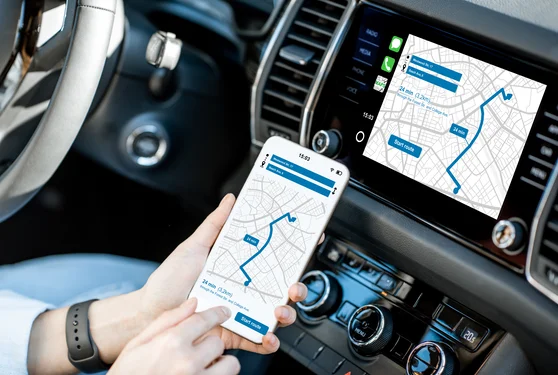

The U.S. urban mobility sector is evolving rapidly. With over 85% of Americans owning smartphones and increased demand for convenience, ride-sharing has become an essential part of daily life in urban and suburban regions. While Uber and Lyft dominate the space, users are more open than ever to alternatives that offer better user experience, transparency, and affordability.
Launching a Lyft-style clone app today doesn’t mean copying—it means building on a proven model while injecting innovation. And for entrepreneurs or transportation companies aiming to disrupt.
U.S. Ride-Sharing Market: Strong, Smart Growth
Let’s look at the reality of the market:
- Market Size: The U.S. ride-sharing market is estimated to be $28.5 billion in 2024 and is expected to grow at a compound annual growth rate (CAGR) of approximately 6.9% over the next decade.
- Global Position: North America holds roughly 65% of the global ride-sharing market share.
- Revenue Per User: The U.S. has the highest average revenue per user (ARPU) globally, expected to hit $592 in 2025, compared to the global ARPU of ~$93.
- Rising Demand: Cities are congested, and car ownership is dropping among younger generations—ride-sharing adoption is increasing.
- Consumer Behavior: 1 in 4 U.S. adults uses ride-hailing services monthly. Yet, 40% say they would switch platforms for better pricing or service.
If you can address even 1% of this market, that’s hundreds of thousands of potential users.

Architecture That Powers Real-Time Ride-Sharing
You’re not just building a mobile app. You’re building a mission-critical, always-on logistics platform. Here's the foundational tech:
3.1 Microservices Architecture
Each core module—authentication, ride matching, pricing, payments—is built as an independent microservice using Node.js or Python with containerized deployment (Docker + Kubernetes). Benefits include:
- Scalability: Auto-scaling each service independently.
- Maintainability: Bug fixes or updates won’t disrupt the whole system.
- Continuous Deployment: New features can be rolled out without downtime.
3.2 Real-Time Communication
- WebSockets enable persistent two-way connections between users and servers, ensuring live ride updates and ETA accuracy.
- Redis caches live GPS pings (typically every 2 seconds from drivers).
- Kafka or similar queuing systems manage the data stream with thousands of concurrent users.
3.3 Payment Processing & Security
- PCI-DSS Compliance is critical. All sensitive payment info must be tokenized and stored off-device.
- Gateways supported are Stripe, Apple Pay, Google Pay, and PayPal.
- Tokenization protects card data, and SSL/TLS ensures encrypted transmission.
3.4 Notifications & Alerts
- Push notifications are managed via Firebase Cloud Messaging (FCM) for Android and Apple Push Notification Service (APNs) for iOS.
- SMS fallback ensures delivery when the device is offline or not reachable.
3.5 Monitoring and Logging
- ELK Stack (Elasticsearch, Logstash, Kibana) for system logs and visualizations.
- Prometheus + Grafana is used to track app performance, uptime, and usage anomalies.

Feature Deep Dive: Passenger, Driver & Admin Modules
A truly competitive Lyft clone must feature robust functionality, built for scale and simplicity:
4.1 Passenger App
- Seamless Registration: Email, social, or OTP login. Data encrypted using AES-256.
- Ride Booking: Choose vehicle category, see ETA, real-time pricing, and fare breakdown.
- Live Tracking: Animated GPS navigation with real-time driver location.
- Digital Wallet: Load funds, split fare with another rider, view past trip invoices.
- Rating System: Rate drivers and flag issues for quality control.
4.2 Driver App
- Shift Management: Toggle online/offline with visibility synced across the system.
- Job Acceptance: Push-based ride requests with a 10–15 second timeout.
- Route Optimization: Integrated turn-by-turn directions using Google Maps or Mapbox.
- Earnings Dashboard: Net/gross trip data, tips, incentive programs, and weekly payout summaries.
- Driver Support: Access in-app FAQs or raise real-time issues via a support ticket system.
4.3 Admin Panel
- User & Driver Management: Approve, suspend, or block profiles; assign driver tiers.
- Dynamic Pricing Engine: Configure surge pricing, holiday fare policies, and minimum fare logic.
- Promotion Management: Add referral campaigns, coupon codes, and loyalty programs.
- Analytics & Reports: Gross booking value (GBV), user churn, average trip duration, heat maps.
- Fraud Detection: Behavior monitoring for suspicious patterns (multiple accounts, GPS spoofing, fake payment attempts).

Why Mobility Infotech: From Tech Stack to Business Stack
Mobility Infotech isn’t just a tech vendor—we are a strategic ride-sharing partner. We deliver:
5.1 Custom Development
- Cross-Platform Apps: Built using Flutter or React Native for Android & iOS.
- Modular Backend: Node.js, MongoDB, PostgreSQL, deployed via AWS/GCP with CI/CD pipelines.
- EV Integration: Add features like EV-only rides, in-app charging station locations, and eco-mode tracking.
5.2 Business-Focused Engineering
- In-app Metrics: Real-time dashboard to track customer acquisition cost (CAC), user lifetime value (LTV), and driver efficiency.
- Surge Engine: Automatically increases fare multipliers during high-demand windows.
- Driver Incentive Algorithms: Customizable logic to reward high-rated or high-volume drivers.
5.3 U.S.-Market Expertise
- Compliance: California’s CCPA data rules, PCI-DSS payments, and GDPR-ready backend.
- Design Standards: App Store & Play Store compliant UI/UX, ADA accessibility support.
- Marketing Readiness: SEO-optimized landing pages, app store metadata, and local area targeting for early user acquisition.

Performance Metrics: What Winning Looks Like
If you’re building for success, these KPIs will guide you:
- User Penetration: 1% of the U.S. market = ~600,000 monthly active users
- Average Ride Value: $15–$22 per ride × avg. 3 rides/user/week = $180+ monthly GMV/user
- Platform Take Rate: 20–30% commission = $36–$54/user/month
- Driver Utilization Rate: Aim for 25–30% of online time to be active trips
- Cancellation Rate: Keep under 5% for healthy UX
- Support SLA: Resolve 90% of tickets in under 24 hours
Combine that with low CAC ($10–$20) and high LTV ($500–$700) and build a profitable unit economy.

Conclusion & Your Next Steps
The U.S. ride-sharing industry is worth billions and growing. With the right product strategy, technology stack, and user-centric design, your Lyft-style platform can deliver exceptional performance, high retention, and scalable revenue.
Mobility Infotech is your all-in-one partner—combining development power, business acumen, and U.S.-market readiness. From MVP to growth-stage scaling, we build not just apps, but businesses.
What You Should Do Now:
- Define your geographic focus and rider persona.
- Finalize your MVP feature list (basic vs. premium ride types, scheduling, subscriptions).
- Partner with a team like Mobility Infotech to build, test, and launch.
- Plan a 90-day rollout: Pilot → Feedback → Optimize → Scale.
You’ve seen how the ride-sharing empire is built. Now let’s build yours.

Summary: Lyft Clone App Development – Build Smart, Scale Fast
The U.S. ride-sharing market is booming, with a projected value of $28.5 billion in 2024 and a high user retention potential. With 1 in 4 Americans regularly using ride-hailing apps—and many open to switching for better service—now is the ideal time to launch a Lyft-style platform that’s user-focused, technically sound, and scalable.
Developing a successful ride-sharing app isn’t about copying but innovating on a proven model. That requires microservices architecture, real-time GPS tracking, secure payment systems, dynamic pricing engines, and robust user management features for passengers, drivers, and admins.
Mobility Infotech stands out as a strategic technology and business partner. It offers cross-platform app development, scalable backends, U.S.-compliant infrastructure, and smart engineering to help businesses penetrate and grow in this lucrative industry.
Whether you're a founder, investor, or enterprise, this is your opportunity to break into a high-demand market with a partner who understands code and commerce. Start lean, scale fast, and build a ride-sharing empire—with Mobility Infotech by your side.
Join 6,000+ marketers and subscribe to our weekly newsletter for exclusive social media news, tips and insights you need to boost results.