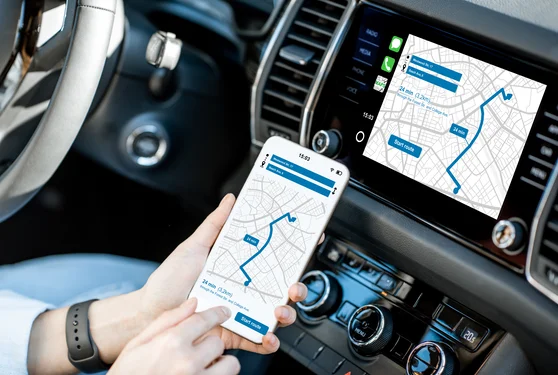

In today's hyper-connected, post-pandemic world, work isn't confined to a desk; it happens everywhere. For startups and growing businesses, where agility and cost-efficiency are paramount, adopting Enterprise Mobility Solutions (EMS) is no longer a luxury—it's the competitive baseline. EMS, often managed through Enterprise Mobility Management (EMM) or Unified Endpoint Management (UEM) systems, empowers employees to access corporate data, applications, and resources securely from any mobile device, anywhere.
Additionally, innovative tools like carpool software can enhance transportation efficiency for employees, further supporting a flexible work environment. This digital shift doesn't just improve productivity; it streamlines operations, facilitates BYOD (Bring Your Own Device) policies, and transforms customer engagement, providing the essential scalable foundation a fast-growing company needs.
This deep-dive by Mobility Infotech explores the crucial role of EMS, its core components, and the strategic advantages it offers as you scale your business from a budding venture to a market leader.
Defining Enterprise Mobility: More Than Just Remote Access
Enterprise Mobility is a holistic business strategy and a set of technologies that enable a mobile workforce. It encompasses the devices, applications, data, and security policies that allow employees, partners, and even customers to interact with core business systems from anywhere.
For startups, this means equipping your lean, often dispersed team with the ability to manage sales pipelines from a tablet or process field orders on a smartphone. Utilizing dedicated shuttle software can further enhance team collaboration by facilitating efficient transportation solutions, ensuring everyone can focus on their tasks without the hassle of commuting logistics.
The Objectives of EMS
The primary goals of implementing an Enterprise Mobility Solution are:
- Increased Productivity: Giving employees instant access to real-time data and necessary applications.
- Operational Streamlining: Reducing dependency on paper and manual processes by shifting information flow to digital channels.
- Data Security & Compliance: Protecting sensitive corporate information, regardless of where or how it is accessed.
- Cost Reduction: Minimizing the need for extensive in-office infrastructure and supporting flexible work models.
The Core Components of Enterprise Mobility Management (EMM)
An effective Enterprise Mobility Solution is built upon a layered stack of integrated technologies collectively known as EMM. These elements work in concert to secure and manage all endpoints that access corporate data.
- Mobile Device Management (MDM): This is the foundation. MDM focuses on managing the entire device. It handles device enrollment, configuration, inventory tracking, operating system updates, remote lock/wipe capabilities for lost or stolen devices, and enforcement of basic security policies like password strength and encryption.
- Mobile Application Management (MAM): MAM deals with the corporate applications on the device. It ensures secure distribution, updating, and management of proprietary and third-party apps, often through a secure, private enterprise app store. Importantly, MAM allows IT to manage corporate apps and data without touching the employee's personal files on a BYOD device.
- Mobile Content Management (MCM): This component provides secure, authenticated access to corporate files and documents on mobile devices. It manages content sharing permissions, prevents unauthorized downloading or forwarding, and ensures data is encrypted both in transit and at rest.
- Identity and Access Management (IAM): Critical for security, IAM includes tools like Single Sign-On (SSO) and Multi-Factor Authentication (MFA). This ensures that only verified users with the correct permissions can access enterprise resources, providing a seamless yet secure login experience across various platforms.
Strategic Advantages for Startups and Growing Businesses
Enterprise Mobility Solutions offer distinct, measurable benefits that directly fuel the rapid scaling required by growing businesses.
A. Accelerated Productivity and Agility
Mobile access to systems like CRM and ERP means decisions aren't delayed. For businesses in the logistics or transport sector, implementing robust taxi cab software allows for real-time fleet monitoring and faster response times, keeping the business agile.
Example: A sales executive can pull up a client's entire history, generate a quote, and finalize a contract immediately after a meeting using a secure mobile sales app. This agility drastically improves customer response time and speeds up the sales cycle.
B. Simplified BYOD and Cost Savings
EMS enables a secure BYOD policy, reducing hardware procurement costs. By integrating taxi company software, firms can also manage third-party vendors and reimbursements more effectively, ensuring that operational costs remain lean as the company grows.
- Cost Efficiency: Reduces hardware procurement and maintenance costs.
- Employee Satisfaction: Increases morale and productivity as employees use devices they are comfortable with.
- Segregation: MAM ensures corporate data is containerized and logically separate from personal data, protecting the company while preserving employee privacy.
C. Scalability without Infrastructure Overhaul
Most modern EMM solutions are cloud-based (SaaS), making them inherently scalable. As your employee count doubles or triples, adding new users and devices to the management console is a matter of clicks, not weeks of server configuration. This rapid, seamless scalability is vital for any growing business.

Secure Enablement: The Zero Trust Model for Mobile
In the world of Enterprise Mobility, the greatest risk comes from the sheer number of endpoints and access points. A single compromised device can lead to a catastrophic data breach. This is why the Zero Trust Architecture (ZTA) is becoming the standard for mobile security.
The core principle of Zero Trust is: Never Trust, Always Verify.
Instead of granting blanket access once a user logs into a device, ZTA for mobile means:
- Continuous Verification: Every access request to corporate data (even from an already logged-in user) is verified based on identity, device health, and location.
- Least Privilege Access: Users are only granted the minimal level of access needed to perform their current task.
- Micro-segmentation: Network access is segmented, ensuring that if one application is compromised, the attacker cannot move laterally to access other sensitive corporate systems.
For a startup, implementing a Zero Trust-aligned EMM solution from day one is far easier and more cost-effective than trying to retrofit security layers later.

The BYOD Challenge: Balancing Flexibility and Security
While BYOD saves money and increases employee convenience, it introduces complex security and legal risks. An effective Enterprise Mobility Solution must master the balance.
| BYOD Challenge | EMM Solution & Strategy |
| Data Leakage (Copying sensitive data) | MAM Data Loss Prevention (DLP) policies prevent corporate data from being copied, pasted, or screenshotted in personal apps. |
| Lost/Stolen Device | Remote Wipe function allows IT to erase only the corporate container (apps and data) while leaving the employee's personal photos, contacts, and apps intact. |
| Compliance Risk (Outdated OS) | MDM enforces mandatory minimum OS versions and security patch installations before granting access to company resources. |
| Privacy Concerns (IT monitoring personal data) | The EMM platform is configured to restrict IT visibility to corporate partitions only, assuring employees that personal data remains private. |

Future-Proofing with Next-Gen Mobility Trends (5G & AI)
To remain a leader in mobility, growing businesses offering carpool software must look toward emerging trends that will shape the next generation of Enterprise Mobility Solutions.
A. The 5G and Edge Computing Synergy
The rollout of 5G connectivity offers ultra-fast speeds and ultra-low latency. This enables a new class of enterprise mobile applications that require real-time processing, such as:
- Augmented Reality (AR) Tools: Field service technicians can use AR overlays on their tablets to visualize repair instructions on complex machinery.
- Real-time IoT Data: Seamless integration and monitoring of high-volume IoT (Internet of Things) sensor data from factory floors or vehicle fleets, facilitated by Edge Computing, which processes data closer to the source, reducing back-end server load.
B. AI and Automation in Mobility Management
Artificial Intelligence (AI) and Machine Learning (ML) are increasingly integrated into EMM/UEM platforms:
- Predictive Threat Detection: AI analyzes device behavior and usage patterns to identify anomalies in software for taxi (e.g., unusual login times or locations) and predict potential security threats before a breach occurs.
Automated Troubleshooting: AI-powered chatbots and virtual assistants provide first-level support, reducing IT helpdesk workload and offering instant troubleshooting for common mobile access issues.

Developing Your Tailored Enterprise Mobility Strategy
Implementing Enterprise Mobility Solutions successfully requires a structured, phase-based strategy tailored to your specific growth trajectory.
- Define Clear Business Goals: Start with why. Are you aiming to increase field service efficiency, reduce travel costs, or simplify remote onboarding? Clearly define the measurable outcomes for your growing business.
- Audit Your Endpoints and Data: Map out every device (corporate-owned, BYOD) and every piece of sensitive data. Determine the specific security level required for each data type.
- Choose the Right Solution (UEM Focus): For modern complexity, opt for a Unified Endpoint Management (UEM) platform. UEM extends EMM to include managing desktops, laptops, and IoT devices from a single console, providing true unified management that simplifies IT operations.
- Pilot and Train: Deploy the solution to a small, controlled group of users first. Collect feedback, refine policies, and develop robust training materials that emphasize security best practices and the benefits of the mobile tools.
- Continuous Governance and Compliance: The mobile threat landscape evolves daily. Regularly review and update your security policies, audit device compliance status, and ensure adherence to relevant data regulations (e.g., GDPR, HIPAA) as your business expands into new markets.

Conclusion
Enterprise Mobility Solutions are the cornerstone of the modern, agile enterprise. For startups and growing businesses, they offer the twin benefits of massive efficiency gains and a rock-solid security framework. With expertise from Mobility Infotech, implementing a layered EMM strategy—focusing on MDM, MAM, and Zero Trust—helps future-proof operations, simplify BYOD, and empower a mobile workforce to drive business growth from anywhere. Additionally, incorporating carpool software enhances collaboration and reduces commuting costs. Investing in a mobile-first workforce strategy today is a critical decision for ensuring scalability, data integrity, and long-term competitive advantage.
Summary
Enterprise Mobility Solutions (EMS) are vital for startups and growing businesses, enabling a secure, productive mobile workforce. Core components like MDM (device management) and MAM (application management) work within an EMM/UEM framework to secure corporate data across all devices. Benefits include accelerated productivity, significant cost savings via managed BYOD policies, and seamless scalability through cloud-based platforms. Modern strategies adopt the Zero Trust Architecture ("Never Trust, Always Verify") for enhanced security. Future trends like 5G connectivity and AI-driven threat detection will continue to revolutionize EMS. Companies must develop a tailored mobility strategy focused on clear business goals, strict security policies, and continuous compliance to unlock their full competitive potential.
Join 6,000+ marketers and subscribe to our weekly newsletter for exclusive social media news, tips and insights you need to boost results.