The rise of ride-hailing apps like Uber and Ola has fundamentally changed how we navigate our cities. These platforms have set the standard for convenience, efficiency, and profitability in the modern mobility landscape. Far from being simple booking tools, these apps are sophisticated, multi-layered technological ecosystems powered by intricate algorithms and a robust technical framework. For any business or entrepreneur looking to enter this dynamic market, building a successful taxi app requires a deep understanding of its core functionalities and the advanced technologies that make it all work.
At Mobility Infotech, we specialize in developing advanced, custom ride-hailing solutions that are engineered to handle real-time communication, process large-scale data, and incorporate future-ready features. This detailed guide explores the essential technical foundation and groundbreaking innovations that drive a successful, Uber-like taxi app.
Core Architecture of a Taxi App
A modern, scalable taxi app is built on a modular architecture designed to handle immense traffic and complex interactions. This system is typically composed of three interconnected modules: the Passenger App, the Driver App, and the Admin Panel.
The technology stack is carefully chosen for performance and scalability:
Frontend: Cross-platform frameworks like React Native or Flutter are the top choices. They allow for a single codebase to be deployed on both iOS and Android, ensuring a seamless user experience across devices and significantly reducing development time and cost.
Backend: The server-side logic is the backbone of the entire system. Frameworks like Node.js, Python (with Django/Flask), or Java Spring Boot are used to build a robust backend, often structured as microservices. This approach breaks down the application into smaller, independent services, making it easier to manage, scale, and update.
Database: A flexible database system is crucial. PostgreSQL or MongoDB are popular choices. PostgreSQL provides strong transactional consistency for structured data like user profiles and payment records, while MongoDB’s document-based model is ideal for handling unstructured, real-time data like ride requests and driver locations.
Hosting: Cloud providers like Amazon Web Services (AWS), Google Cloud, or Neon Cloud provide the scalable infrastructure needed to handle fluctuating demand. Their serverless computing and auto-scaling features ensure the app performs smoothly even during peak hours.
Communication Layer: The heart of a real-time app lies in its communication. Technologies like WebSockets, Firebase, and Twilio are essential for enabling instant messaging, real-time location updates, and immediate push notifications.
This architecture is typically event-driven, meaning that the system reacts to events in real time (e.g., a new ride request, a driver's location update). With layers of load balancing and caching (using services like Redis or Memcached), the system can maintain high performance and low latency, no matter how many users are active.
User-Side Functionality and Experience
The passenger-facing app is all about delivering a simple, intuitive, and seamless user experience. The features are designed to make the journey from booking to destination as effortless as possible:
Registration & Authentication: The process must be secure and quick. Options like OAuth 2.0 for social media logins and biometric authentication (fingerprint/Face ID) are critical for providing a convenient and secure entry point.
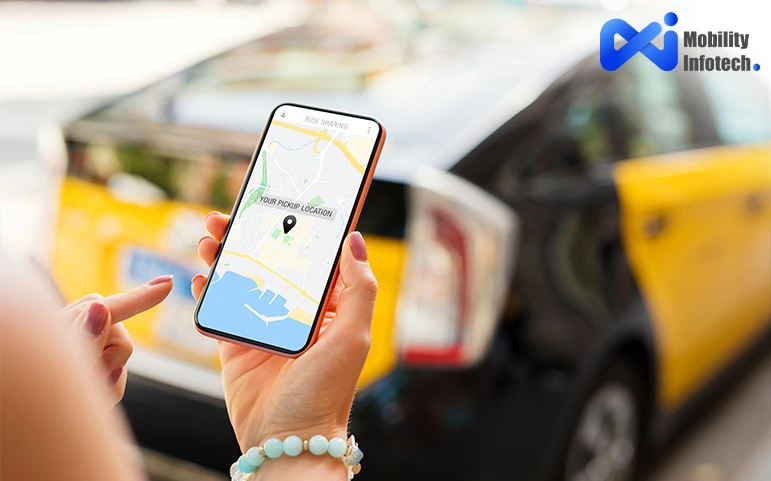
Ride Booking: This is the core function. Users can set their pickup and drop-off locations, and the system uses sophisticated algorithms to match them with the nearest available driver. This often involves combining location-based calculations (like the Haversine formula) with geofencing to ensure the driver is within the service area.
ETA & Fare Estimation: A transparent and accurate fare estimate builds trust. These apps use sophisticated algorithms that analyze historical data, real-time traffic conditions, and demand-supply dynamics to provide a precise estimated time of arrival and a fair fare. This is where dynamic pricing comes into play, adjusting prices based on demand to incentivize more drivers to get on the road during busy periods.
Ride Tracking: Once a ride is booked, real-time tracking is a must-have feature. The system uses socket programming to provide low-latency updates, allowing passengers to watch their driver’s icon move on the map in real time.
Notifications & Communication: The app keeps users informed through instant push alerts (via Firebase Cloud Messaging/Apple Push Notification Service) for status updates, such as when a driver is arriving or the ride has started. An in-app chat with end-to-end encryption also allows for seamless communication between the passenger and the driver without sharing personal contact information.

Driver-Side Functionality and Fleet Optimization
The driver app is a specialized tool built for efficiency, transparency, and safety. It empowers drivers and helps fleet owners manage their operations effectively:
Onboarding & Verification:
The process for new drivers must be thorough and efficient. AI-driven modules for document scanning (using OCR) and KYC (Know Your Customer) verification automate the process of checking licenses, vehicle registration, and insurance, ensuring compliance and security.
Ride Allocation:
The heart of the driver app is the matching engine. It uses sophisticated algorithms, such as priority queues and load balancing, to intelligently assign rides to drivers. Factors like proximity, driver rating, vehicle type, and current workload are all considered to ensure fair and efficient distribution.
Navigation:
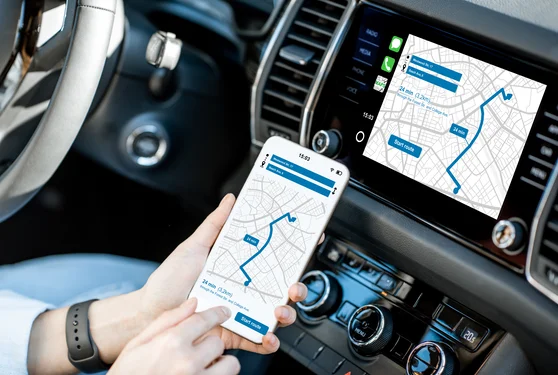
While drivers may use external apps, the in-app navigation must be robust. Real-time routing with traffic-aware rerouting, powered by algorithms like Dijkstra's or A*, helps drivers find the fastest routes and avoid traffic jams.
Earnings Dashboard:
A transparent earnings dashboard is crucial for driver retention. It provides automated summaries of trip earnings, settlement details, and tax records, eliminating manual paperwork and confusion.
Performance Analytics:
Drivers and fleet owners can access key performance indicators (KPIs) like acceptance rates, cancellation patterns, and customer ratings. This data helps drivers improve their service and allows fleet managers to monitor and optimize overall performance.

Real-Time Tracking and Navigation Algorithms
The geospatial backbone of a taxi app is what makes it truly a real-time service. It ensures that every pin drop and every route calculation is precise and instantaneous.
Location Tracking: The app relies on a combination of technologies for pinpoint accuracy: GPS for satellite tracking, A-GPS (Assisted GPS) for faster lock times, and cell tower triangulation for basic location even in areas with weak satellite signals.
Distance Calculations: Accurate distance is critical for fare estimation and ETA. The Haversine formula is a standard for calculating the great-circle distance between two points on a sphere (the earth), ideal for shorter trips. For very long distances, more complex formulas like Vincenty's formula may be used for higher precision.
Pathfinding Algorithms: Finding the optimal route is a complex computational problem. Algorithms like Dijkstra’s and A* are the go-to solutions for mapping the most efficient path, considering real-time traffic data, road closures, and other variables.
Geofencing: Geofencing is used to define virtual boundaries around specific geographic areas. The system can trigger alerts when a vehicle enters or exits a predefined zone, which is essential for managing service areas, applying specific pricing to certain zones, or sending promotional notifications.
Data Streaming: For location updates to be truly real-time, the app uses protocols like WebSockets and MQTT to ensure sub-second latency. This guarantees that passengers see the driver's vehicle move smoothly on the map, without any lag.

Payments, Wallets, and Security Infrastructure
A secure and versatile payment system is non-negotiable for building customer trust and ensuring a seamless experience.
Payment Options: A modern taxi app must support a wide range of payment methods, including digital wallets like UPI, credit/debit cards, and net banking.
Compliance & Security: All payment gateways must be PCI-DSS certified to ensure sensitive card data is handled securely. Techniques like tokenization replace actual card numbers with a unique token, further protecting user information from breaches.
Fraud Prevention: To detect and prevent fraudulent activity, AI-based anomaly detection systems analyze transaction patterns. They can flag unusual behavior, such as a large number of failed transactions from a single account or a sudden change in spending patterns.
Split Payments: This feature allows multiple riders to easily split the fare, a common use case for shared rides. The app’s backend handles the complex logic of allocating costs to each passenger’s account.
Encryption: From user data to communications, everything is protected. End-to-end encryption using AES-256 and SSL pinning (a technique that ensures the app only connects to trusted servers) secures all transactions and data transfers.
At Mobility Infotech, we integrate payment systems that are compliant with multi-currency and multi-region regulations, enabling our clients to scale their operations globally.

Admin Dashboard and Data-Driven Control
The admin panel is the central nervous system of the entire operation. It provides administrators with a powerful set of tools to monitor, manage, and optimize the business in real time.
User & Driver Management: Admins can manage user and driver profiles, approve new registrations, and handle support tickets. Real-time monitoring allows them to track the status of drivers and vehicles.
Dynamic Pricing: This is where the business can maximize revenue. The admin dashboard allows operators to set up and manage surge pricing models based on real-time data. These models often use AI-powered analysis of demand and supply to automatically adjust fares during peak times, ensuring a healthy balance for both drivers and passengers.
Heat Maps: Visual heat maps show demand hotspots across the city. This data is invaluable for strategic driver allocation, allowing administrators to direct drivers to high-demand areas and reduce passenger wait times.
Fleet & Compliance Tracking: Fleet managers can track vehicle maintenance schedules, insurance renewals, and registration alerts, ensuring the fleet remains compliant and operational.
Analytics: The dashboard integrates Business Intelligence (BI) tools to provide deep insights into key performance indicators (KPIs) like revenue per ride, driver utilization rates, and customer churn. This data-driven approach allows for predictive decision-making, helping the business anticipate market changes and stay ahead of the competition.

Advanced Technologies Powering Taxi Apps
To stay competitive in the fast-paced mobility market, a taxi app must embrace cutting-edge technologies that go beyond the basic functions.
AI & ML: Artificial Intelligence and Machine Learning are used for everything from predictive demand forecasting to dynamic pricing models. These technologies analyze vast datasets to predict where and when demand will surge, allowing the app to proactively incentivize drivers to move to those areas. ML models also help in churn reduction by identifying at-risk drivers or users and suggesting interventions.
IoT: The Internet of Things (IoT) connects the physical world to the digital. Vehicle telematics devices can be installed in cars to monitor real-time data on fuel consumption, engine health, speed, and driver behavior. This data can be used to improve safety, reduce operational costs, and identify fraudulent activity.
Blockchain: While not yet mainstream, Blockchain holds immense potential for the ride-hailing industry. It can create secure, transparent ledgers for driver payments, ensuring that every transaction is fraud-proof and immutable.
AR Navigation: Augmented Reality (AR) can enhance the driver experience by providing on-screen, turn-by-turn guidance superimposed on a real-world view through the phone's camera. This is particularly useful in complex cityscapes with multi-lane intersections and numerous turns.
Voice Integration: Integrating with smart assistants like Alexa, Siri, and Google Assistant allows users to book a ride with a simple voice command, making the service more accessible and convenient.

Conclusion
A taxi app similar to Uber is much more than a simple booking platform. It is a sophisticated, real-time, and data-driven mobility ecosystem that requires robust architecture, advanced algorithms, secure payment systems, and a deep understanding of data analytics. The success of such a platform hinges on its ability to seamlessly integrate these complex components and provide a user-centric experience.
At Mobility Infotech, we specialize in building ride-hailing solutions that are not only functional but also scalable, secure, and ready for the future. By partnering with us, businesses can launch a platform that is designed to compete with industry leaders and to evolve with the next era of urban mobility.
If you are planning to launch a ride-hailing app and want to build a solution that is truly future-ready, contact Mobility Infotech today.
Join 6,000+ marketers and subscribe to our weekly newsletter for exclusive social media news, tips and insights you need to boost results.

Christl Paulsen
Christl Paulsen is a digital marketer helping brands grow online through strategy, storytelling, and data-driven campaigns that drive real results.