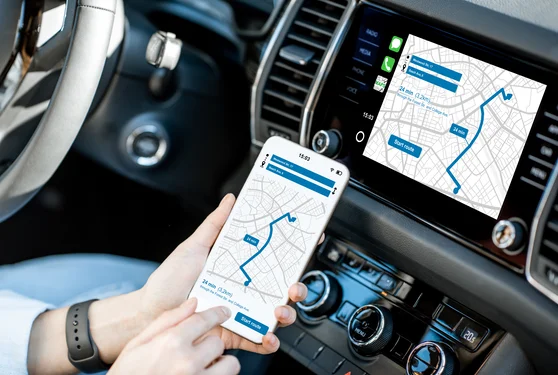
In the hyper-competitive world of on-demand transportation, speed-to-market and operational efficiency are non-negotiable. Building a robust ride-hailing application from the ground up can take over a year and drain hundreds of thousands of dollars. The solution for the savvy entrepreneur or expanding transportation business? A Lyft clone script. This pre-built, white-label software solution provides the core, battle-tested framework—a rider app, a driver app, and a powerful admin panel—that powers industry giants. Customizing and deploying this script is the fastest, most cost-effective way to launch your unique transportation network company (TNC). This guide will provide a technical, step-by-step roadmap for transforming a generic clone script into a market-ready, branded mobility platform.
The Strategic Advantage of a White-Label Script
A Lyft clone script is a complete, pre-engineered software stack designed to replicate the core business logic of a successful ride-hailing service. It's a white-label solution, meaning it is free of the original developer's branding, ready for immediate rebranding.
| Factor | Custom Development | Clone Script (White-Label) |
| Time to Market | 12-18+ Months | 2-8 Weeks (depending on customization) |
| Initial Cost | High (>$100,000) | Low to Moderate ($5,000 - $50,000+) |
| Core Functionality | Must be built and tested from scratch | Pre-built and battle-tested |
| Risk | High (Proof of concept, major bugs) | Low (Proven business model, fewer critical bugs) |
| Focus | Coding and debugging | Branding, market strategy, and unique features |
Key Components of the Script
A robust clone script is composed of three interconnected platforms, each requiring dedicated attention during the customization and deployment phase:
- Rider Application (iOS/Android): Handles booking, real-time tracking, payment, and ratings.
- Driver Application (iOS/Android): Manages ride requests, navigation, earnings, and availability toggle.
- Admin Panel (Web Dashboard): The central command for managing users, drivers, trips, finance, and pricing.

Essential Customization: Branding and UI/UX Refinement
The first step in making the clone script yours is the white-label process. This moves beyond merely changing a logo; it’s about establishing your distinct brand identity and ensuring an intuitive User Interface/User Experience (UI/UX).
Branding Elements
- Logo and App Icon Replacement: Replace all instances of the generic logo across the Rider, Driver, and Admin panels.
- Color Palette Implementation: Modify the CSS/SASS files and theme variables within the mobile application's frontend framework (e.g., React Native, Flutter, Swift, or Kotlin) to implement your brand's color scheme. This ensures visual coherence across all platforms.
- Typography and Assets: Select brand-aligned fonts and update all in-app graphics (splash screens, illustrations, vehicle icons).
UX/UI Code Refinement
While the core booking flow is proven, localizing the UX is vital.
- Localization: Update text strings, currency symbols, and language files. For markets with right-to-left (RTL) languages (e.g., Arabic, Hebrew), ensure the script fully supports RTL rendering on both mobile platforms.
- Onboarding Flow Optimization: Simplify the user and driver registration process. Consider integrating secure Social Login APIs (e.g., Google, Facebook) to reduce friction during sign-up.

Technical Customization: Core Feature Adaptation
The core of customization lies in modifying the backend logic to align with your specific business model and local regulations. This typically involves work within the server-side code (often built with Node.js, Python/Django, or PHP/Laravel).
Fare Calculation Logic
The most critical customization is the Fare Calculation Algorithm. You must adapt the existing logic to reflect your pricing structure.
- Base Fare Modification: Set your unique starting price.
- Time and Distance Rate Adjustment: Modify the per-minute and per-kilometer/mile cost parameters.
- Surge Pricing Model: Adjust the dynamic pricing logic, which is often a function of high demand (active ride requests) versus low supply (available nearby drivers). The logic should calculate the Surge Multiplier ($M$) and apply it to the base fare.
$Fare_{total} = (Base + Distance \times Rate_{dist} + Time \times Rate_{time}) \times M$ - Commission Structure: Configure the Admin Panel to accurately deduct your chosen commission percentage from the driver's total earnings.
Custom Service Types
You'll need to define and configure new vehicle and service categories that resonate with your local market.
- Vehicle Data Model: Update the database schema to include your custom vehicle types (e.g., "Bike Taxi," "Luxury Sedan," "Electric Scooter," "Women-Only Ride").
- Admin Configuration: Ensure the Admin Panel allows you to upload vehicle images, set specific minimum and maximum fares for each type, and link them to the driver verification process.

Crucial API Integrations for Real-Time Functionality
A ride-hailing app's viability rests entirely on its real-time capabilities, which are powered by robust third-party APIs. The clone script will have placeholders, but you must provision your own API keys and configure them within the backend.
Geospatial Mapping and Navigation
- API Key Setup: Secure and integrate a high-volume geospatial API, typically the Google Maps Platform or Mapbox. The most critical services needed are:
- Directions API: For calculating optimal routes and travel time.
- Geocoding API: For converting addresses into precise geographic coordinates ($\text{latitude, longitude}$).
- Distance Matrix API: For calculating distance and travel time between multiple driver/rider points.
- Real-time GPS Tracking: The mobile apps use the device's GPS hardware and integrate with the map API to send location updates to the backend at regular intervals (e.g., every 2-5 seconds) via WebSockets or MQTT protocol for low-latency communication.
Payment Gateway Integration
You need to integrate local and international payment options.
- Gateway Configuration: Replace the generic payment tokens with your live API keys from providers like Stripe, PayPal Braintree, or a regional gateway (e.g., Razorpay, Paystack). This involves configuring the SDK/library on the mobile frontend and handling server-side transaction processing via webhooks for secure, asynchronous confirmation.
- E-Wallet Functionality: If the script includes an in-app wallet, ensure its transaction ledger is securely implemented in the database, typically using a dedicated Financial Transaction Table with immutable records.
Communication and Notifications
- Push Notifications: Integrate Firebase Cloud Messaging (FCM) for Android and Apple Push Notification Service (APNS) for iOS to deliver instant alerts (ride accepted, driver arrived, payment received). The backend must be configured to send the correct payload to the respective services.
- SMS Gateway: Integrate a service like Twilio for mandatory driver/rider phone number verification (OTP) and backup ride notifications.

Configuring the Operational Command Center: The Admin Panel
The Admin Panel is your mission control. Customization here focuses on operational parameters and data integrity.
Geo-Fencing and Zone Management
- Define Operational Areas: Use the Admin Panel's map interface to draw polygons that define your service areas. This geo-fencing is crucial for accepting or rejecting ride requests based on location and implementing zone-specific pricing.
- Heat Map Configuration: Ensure the system’s Heat Map feature is correctly aggregating and visualizing high-demand areas from your real-time data flow, allowing dispatchers and the surge algorithm to make data-driven decisions.
Driver and User Management Workflows
- Verification Customization: Configure the mandatory documents for driver onboarding (license, insurance, vehicle registration) and build in the backend logic for human or automated verification workflows.
- Reporting and Analytics: Customize the admin dashboard to generate reports tailored to your key performance indicators (KPIs), such as Driver Retention Rate, Peak Hour Utilization, and Average Customer Waiting Time. This usually involves modifying SQL queries or integrating an analytics API (e.g., Mixpanel).

The Deployment Pipeline: From Codebase to App Stores
Deployment is a multi-phase process that moves the customized code from development to a live, production environment.
Server Infrastructure Setup
- Cloud Hosting: Choose a scalable cloud service like AWS, Google Cloud Platform (GCP), or Microsoft Azure. The architecture typically requires:
- Web Servers (for the Admin Panel and API endpoints).
- Database Servers (e.g., PostgreSQL or MongoDB for high-volume data).
- Load Balancer: Essential for distributing incoming traffic during peak hours, ensuring application stability and scalability.
- CI/CD Pipeline: Implement a Continuous Integration/Continuous Deployment (CI/CD) pipeline (using tools like Jenkins, GitLab CI, or GitHub Actions) to automate the deployment of backend updates, ensuring rapid, consistent, and error-free releases.
Quality Assurance (QA) and Testing
Before launch, rigorous testing is non-negotiable.
- End-to-End (E2E) Testing: Simulate the entire ride-hailing flow: Rider booking $\rightarrow$ Driver accepting $\rightarrow$ Real-time tracking $\rightarrow$ Payment completion.
- Load Testing: Use tools like JMeter or LoadRunner to simulate thousands of concurrent users and ride requests. This confirms that your cloud infrastructure and database can handle projected peak-hour load without latency spikes. The system must maintain a response time latency below $500\text{ms}$ for core functions.
- Security Audit: Conduct penetration testing to identify and patch vulnerabilities, especially in the payment and authentication systems (e.g., ensuring compliance with PCI-DSS standards for payment processing).
App Store Submission
- Developer Accounts: Secure developer accounts for both the Apple App Store ($99/year) and Google Play Store ($25 one-time fee).
- Build Finalization: Generate the final, signed production builds (.ipa for iOS, .apk or .aab for Android).
- Metadata Preparation: Craft compelling, SEO-optimized titles, descriptions, and keywords for App Store Optimization (ASO) to improve visibility. Submit the apps, addressing any technical or content rejection feedback swiftly.

Post-Launch Imperatives: Scalability and Security
A successful launch is merely the beginning. Sustained growth and service reliability depend on continuous monitoring and strategic architectural planning.
Horizontal Scalability
A good clone script should be built on a microservices or service-oriented architecture (SOA), allowing for horizontal scaling.
- Stateless Services: Ensure that your key API services (like ride-matching) are stateless. This allows you to add new instances of the server (e.g., auto-scaling groups on AWS) during traffic spikes without requiring session data persistence on that specific instance.
- Database Replication: Implement primary-replica database replication. All write operations (new bookings) go to the primary database, while read operations (map display, ride history) are distributed across multiple replicas, significantly boosting read performance under load.
Ongoing Maintenance and Security Patches
- Monitoring: Use tools like Datadog or Prometheus to monitor server health, application performance, and API usage (especially map and SMS costs). Set up automated alerts for high latency or resource exhaustion.
- Regular Updates: Commit to a regular release cycle for bug fixes, feature enhancements, and—most importantly—OS-level updates. Both Apple and Google frequently release changes that require code adjustments to maintain compatibility and security standards.

Conclusion
Customizing and deploying a high-quality Lyft clone script with Mobility Infotech is a pragmatic, technically sound strategy for entering the competitive ride-hailing market. By leveraging Mobility Infotech’s white-label solutions, you can focus on branding, adapt the core pricing and service models, and robustly integrate essential third-party APIs for real-time functionality. Executing a professional deployment and QA process allows you to bypass the years and massive capital typically required for greenfield development. Your success hinges on the depth of your customization—making the script a reflection of your unique local market strategy—and the stability of your deployed infrastructure. The roadmap is clear: leverage Mobility Infotech’s proven technology and focus your resources on driver acquisition, customer experience, and rapid market expansion.
Summary
- Start with a pre-built white-label solution
Mobility Infotech begins by offering a fully customizable, ready-made clone script designed for rapid deployment and enterprise-grade stability.
- Refine the UI and UX
Tailor the visual experience with your brand identity, including logo, color palette, typography, and layout enhancements for better user retention.
- Customize core backend logic
Mobility Infotech’s development team modifies key components such as the Fare Calculation Algorithm, commission rules, surge logic, and user flow structure.
- Define unique service types
Add or adjust categories like rentals, outstation trips, luxury rides, bike taxis, corporate mobility, or shared trips to create diverse revenue streams.
- Integrate proprietary API keys
- Implement Geospatial Mapping services (Google Maps or Mapbox) for navigation and real-time tracking.
- Add secure Payment Gateways such as Stripe or PayPal to enable smooth and safe transactions.
- Implement Geospatial Mapping services (Google Maps or Mapbox) for navigation and real-time tracking.
- Configure the Admin Panel
Set up operational and regulatory controls, including geo-fencing, surge pricing, promo code management, fleet control, driver KYC systems, and analytics dashboards provided by Mobility Infotech.
- Prepare cloud deployment architecture
Deploy the system on a scalable cloud setup using autoscaling, load balancing, and distributed servers to maintain uptime even during peak usage.
- Set up CI/CD pipelines
Enable automated integrations, testing, and rollout processes for faster and error-free feature releases.
- Conduct rigorous testing
Perform Load Testing, Security Audits, Penetration Testing, and QA inspections to ensure the app withstands high traffic and remains secure.
- Optimize for App Store approvals
Enhance ASO elements such as metadata, keywords, previews, screenshots, and content compliance for smoother acceptance on the Play Store and App Store.
- Launch and monitor continuously
Track logs, performance analytics, user behavior, and server load in real time to maintain stability after launch.
Focus on horizontal scalability
Mobility Infotech ensures your platform can expand easily by scaling databases, microservices, caching layers, and API throughput as your user base grows.
Join 6,000+ marketers and subscribe to our weekly newsletter for exclusive social media news, tips and insights you need to boost results.

Rachael Huber
I’m a web developer who doesn’t just write code—I live it. Web development isn’t just my profession; it’s my passion, my hobby, and my constant curiosity.