
In the rapidly evolving landscape of 2026, the global transportation market has moved beyond simple ride-hailing to a sophisticated ecosystem of "Mobility-as-a-Service" (MaaS). For entrepreneurs and fleet owners, the secret to surviving and thriving isn't just about having cars on the road; it’s about the intelligence of the system managing them. An Uber-like taxi dispatch software has become the central nervous system of modern urban transit. Whether you are a startup looking to disrupt a local market or an established fleet operator modernizing your operations, understanding the high-tech features of a robust taxi dispatch solution is the first step toward digital dominance.
At Mobility Infotech, we have seen firsthand how the right taxi dispatching software can transform a struggling fleet into a high-revenue, data-driven powerhouse. Resilient As we navigate the complexities of 2026—where AI-driven demand forecasting and electric vehicle (EV) fleet management are the norms—your software must do more than just "match" a rider with a driver. It must predict, optimize, and secure every single mile.
The Anatomy of Modern Taxi Dispatch Software: A 2026 Perspective
In 2026, the term taxi dispatch software refers to a multi-layered platform that synchronizes three distinct yet interconnected interfaces: the Passenger App, the Driver App, and the Admin Dispatch Panel. In the past, these systems were largely reactive. Today, they are "agentic," meaning they can make autonomous decisions—like re-routing a driver based on predicted traffic patterns before the congestion even starts.
A high-performance taxi software dispatch system acts as a bridge between supply and demand. It utilizes sophisticated algorithms to ensure that the nearest, most suitable vehicle is assigned to a request, minimizing "dead mileage" (the distance a driver travels without a passenger). For the business owner, this translates directly into higher profit margins and lower operational overhead.
The Power of the Passenger App: Enhancing User Experience
The passenger app is your brand’s storefront. In a world where attention spans are measured in seconds, your taxi dispatch solution must offer a friction-free experience.
- Multi-Modal Booking: In 2026, users don't just want a "taxi." They want options. The software now integrates various ride types—standard, luxury, EV-only, and even "micro-mobility" options like e-bikes for short distances.
- Predictive Search & Favorite Destinations: Using machine learning, the app predicts where the user wants to go based on time of day, calendar events, and past behavior.
- Precise ETA & Live Tracking: High-precision GPS tracking ensures that the estimated time of arrival is accurate to within seconds. This transparency builds the trust necessary for customer retention.
- Seamless In-App Payments: From traditional credit cards to crypto-wallets and biometrically authenticated "One-Tap" payments, the payment gateway must be diverse and ultra-secure.
Empowering the Driver: Key Features of the Driver App
Your drivers are your most valuable resource. If the taxi dispatching software is difficult to use, you will face high turnover. The 2026 driver app is designed to be a "digital co-pilot."
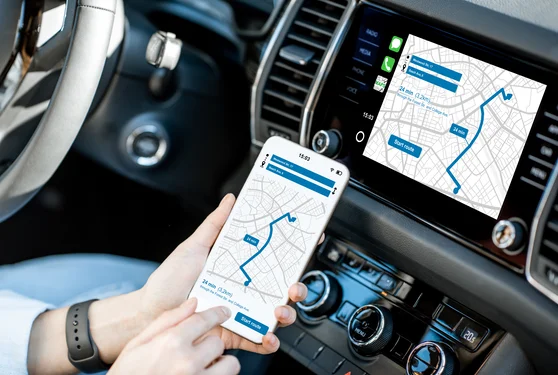
- AI-Optimized Navigation: Gone are the days of standard GPS. Modern apps use "Anticipatory Routing" to guide drivers through the fastest possible paths, accounting for live city data, road closures, and even weather patterns.
- Earnings Analytics Dashboard: Drivers can see their daily, weekly, and monthly earnings in real-time, including tips and bonuses. This transparency motivates drivers to stay active during peak hours.
- Heat Maps for High Demand: The app shows drivers "Hot Zones" where demand is high, helping them position themselves strategically to catch the next ride faster.
- Driver Wellness & Safety Alerts: In 2026, safety includes monitoring for driver fatigue. The software uses sensor data to suggest breaks, ensuring both the driver and passenger stay safe.
The Command Center: Unpacking the Admin Panel & Taxi Software Dispatch
If the apps are the hands, the Admin Panel is the brain. This is where the business owner controls the entire ecosystem. A top-tier taxi software dispatch console provides a 360-degree view of the fleet.
- Automated Dispatch Logic: While manual dispatching is still an option for complex cases, 99% of rides are now handled by an "Auto-Allocation Engine." This engine uses a multi-variable formula:
$Score = (Distance \times W_1) + (Driver Rating \times W_2) + (Idle Time \times W_3)$ - Dynamic Surge Pricing: The software automatically adjusts fares based on real-time demand and supply. This helps balance the market during events, rush hours, or bad weather.
- Geofencing & Zone Management: Admins can draw virtual boundaries on a map to set specific pricing for airports, downtown districts, or suburban zones.
- Detailed Business Intelligence (BI): The system generates deep-dive reports on revenue, driver performance, and customer acquisition costs, allowing for data-driven scaling.

Advanced Automation: Why AI is the Heart of Your Taxi Dispatch Solution
In 2026, "AI-powered" is no longer a buzzword; it is a requirement. A modern taxi dispatch solution uses Agentic AI to handle complex tasks that previously required a team of human dispatchers.
One of the most significant breakthroughs is Demand Forecasting. By analyzing years of historical data combined with live social feeds (detecting a concert or a delayed flight), the AI can predict a spike in demand 30 minutes before it happens. It then sends push notifications to "off-duty" drivers, incentivizing them to log on. This proactive approach eliminates the "no cars available" message that kills customer loyalty.
Furthermore, AI handles Fraud Detection. The system monitors for "GPS Spoofing" or suspicious payment patterns, automatically flagging or blocking accounts to protect the business’s bottom line.
Safety & Security: The Non-Negotiables in 2026
As regulations tighten globally, the safety features of your taxi dispatching software must be ironclad.
- Biometric Verification: Both drivers and passengers can be verified using facial recognition or fingerprint scanning to ensure the person in the car matches the profile on the app.
- SOS & Emergency Integration: A single tap on the SOS button alerts the dispatch center and local emergency services, providing live audio/video feeds from the driver’s smartphone.
- Trip Sharing: Passengers can share their live location with family or friends, a feature that has become a global industry standard for safety.
- Data Encryption: With the rise of cyber-attacks, all user data—from home addresses to payment info—must be protected with end-to-end AES-256 encryption.

Technical Infrastructure: Building for Scalability and Resilience
The tech stack behind a taxi software dispatch system determines its ability to handle 1,000 or 1,000,000 rides. At Mobility Infotech, we prioritize a "Cloud-Native" approach.
- Microservices Architecture: By breaking the software into smaller, independent services (e.g., one for payments, one for tracking), the system becomes much more stable. If the payment service has a glitch, the dispatching engine keeps running.
- Real-Time Data Processing: Using technologies like WebSockets and Kafka, the software processes millions of data points per second to ensure that the "moving dot" on the map is never lagging.
- API-First Design: This allows your taxi business to integrate with external partners—hotels, airlines, and local government transit apps—creating a wider net for customer acquisition.
The Future of Mobility: EV and Autonomous Fleet Integration
By 2026, the shift toward sustainability is undeniable. Your taxi dispatching software must be "Green Ready."
- EV Management: This includes tracking the battery levels of your fleet and automatically routing drivers to the nearest charging station when they are low. The dispatch logic even prioritizes EVs for "Eco-Conscious" riders.
- Autonomous Vehicle (AV) Readiness: While human drivers still dominate, the transition to driverless "Robo-taxis" is beginning. A future-proof taxi dispatch solution is designed to manage a hybrid fleet where human drivers and AVs work side-by-side.

Conclusion
Building an Uber-like experience in 2026 is an ambitious but highly rewarding endeavor. The key lies in selecting a taxi dispatch software that is not just a tool, but a strategic partner. From the seamless UI of the passenger app to the predictive power of the AI-driven admin panel, every feature must work in harmony to deliver a world-class service.
At Mobility Infotech, we specialize in developing cutting-edge taxi dispatching software tailored to your specific market needs. We don't just build apps; we build businesses. By integrating the latest in AI, security, and EV management, we ensure that your fleet is always ahead of the curve.
Summary
The 2026 taxi industry demands a sophisticated taxi dispatching software that combines user-centric design with powerful AI automation. This blog explored the essential features of an Uber-like taxi dispatch solution, highlighting the necessity of integrated apps for passengers and drivers, a centralized taxi software dispatch admin panel, and advanced AI for demand forecasting. Key takeaways include the growing importance of safety through biometrics, the move toward EV fleet management, and the technical resilience provided by cloud-native architectures. Mobility Infotech remains at the forefront, providing the tools necessary for modern fleets to scale efficiently and profitably.
Join 6,000+ marketers and subscribe to our weekly newsletter for exclusive social media news, tips and insights you need to boost results.