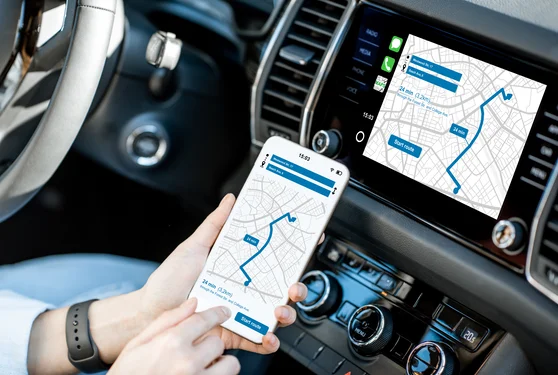
In a mobility-first era defined by on-demand expectations and hyper-localized user experiences, choosing the right cab-app development partner can make or break your operational efficiency. At Mobility Infotech, we don’t just deliver code—we architect high-velocity, scalable, and future-ready ride-hailing ecosystems meticulously optimized across the DevOps, cloud, and AI stack. Leveraging a microservices-centric architecture, real-time routing algorithms, secure payment pipelines, and predictive analytics, Mobility Infotech consistently elevates client differentiation—making us the top pick for cab app development. This blog dives deep into the five most critical service pillars we deliver and explains how our technical prowess transforms mobility ventures into category leaders.
System Architecture and Microservices-Oriented Design
Mobility Infotech adopts a domain-driven microservices architecture, decomposing monolithic systems into specialized bounded contexts such as driver-service, booking-service, pricing-service, and analytics-service. This decoupled architecture empowers:
- Independent scaling: During peak demand (e.g., surge hours), only the booking-service or routing-service autoscale—reducing overall cloud costs.
- Polyglot service stacks: Teams can select best-fit languages—Java/Kotlin for high-throughput services, Node.js for fast I/O, and Python for analytics microservices—without dependency hell.
- Isolation and resilience: Circuit-breaker patterns (e.g., Hystrix or Resilience4J) can contain cascading failures, whereas API Gateways (such as Kong or AWS API Gateway) enforce service routing, authentication, and request throttling with minimal latency.
With container orchestration (Kubernetes/EKS/GKE) and service mesh (Istio/Linkerd) embedded, deployment pipelines become declarative, self-healing, and observability-rich—key to fault-tolerant mobility platforms.

Real-Time Geolocation & Routing — High-Performance GPS Stack
At the core of every cab-app lies geospatial routing. Mobility Infotech builds:
- Dual-layer geolocation: Real-time GPS polling integrated with cell-tower triangulation for redundancy in low-signal zones.
- Hierarchical quadtrees and R-trees: These generate ultra-fast proximity searches (e.g., “nearest 3 drivers”) within variable scopes (100 m, 500 m) using optimized spatial indices.
- Graph-based traffic-aware routing: Our services plug into real-time traffic APIs (e.g., HERE, TomTom) and calculate ETA with dynamic edge-weighting algorithms—faster than static Dijkstra. For on-the-fly reroutes, incremental A* heuristics dynamically optimise the path.
- Edge caching: We cache frequently traversed grid-cells enabling lightning-fast lookups for high-density areas, reducing API calls and latency.
This layered geospatial intelligence ensures precision, speed, and seamless UX in navigation-heavy, real-time mobility environments.

Scalable Backend Infrastructure & DevOps Excellence
Building a robust cab-app means provisioning infrastructure that can horizontally scale, auto-recover, and deploy with zero downtime. Mobility Infotech achieves this through:
- IaC with Terraform/CloudFormation: Infrastructure as Code underpins immutable provisioning of VPCs, load balancers (ELB), auto-scaling groups, and managed databases.
- CI/CD pipelines (Jenkins, GitHub Actions, GitLab CI): Each commit triggers unit/integration tests, container builds, and multi-env promotion (dev → staging → prod) with blue-green or canary deployments.
- Containerization (Docker) + Orchestration: Deployments run in Kubernetes clusters with HPA (Horizontal Pod Autoscaler) and liveness/readiness probes to ensure container health.
- Monitoring & AIOps: Full-stack observability via Prometheus, Grafana, and ELK stack logs: latency across hotspots, exception traces, 95th-percentile response times, and auto-remediation triggers (e.g., restart pods on failure) elevate service SLAs.
This DevOps fabric embeds continuous improvement, reliability, and infrastructure-as-code discipline at the heart of Mobility Infotech’s delivery model.

Secure Payment Integration & Tokenization Mechanisms
Money lies at the transaction layer—hence, security and compliance are non-negotiable. Mobility Infotech ensures end-to-end transactional integrity via:
- PCI-DSS compliant gateways: Integrated with regionally relevant gateways like Stripe, Razorpay, or Adyen—using secure vaulting and 3DS 2.0 for card authentication.
- Token-based architecture: Payment tokens replace sensitive card data. Backend processes never store raw PAN (Primary Account Number), reducing scope of PCI liability.
- Fraud detection & anomaly analysis: We implement machine-learning models that evaluate transaction velocity, geolocation mismatches, and device fingerprints to flag suspicious bookings in real time.
- Secure webhook handling: HMAC-signed payloads and replay-attack guards ensure that all async callbacks from payment processors are validated and non-repudiable.
Such security layers safeguard user trust and operational integrity—imperative for high-trust cab-app ecosystems.

AI-Driven Demand Forecasting & Dynamic Pricing
To boost driver utilization and customer satisfaction, Mobility Infotech embeds AI at the pricing tier:
- Time-series forecasting: Models (e.g., ARIMA, Prophet, LSTM) predict demand surges based on temporal signals (weekend, events, weather).
- Geospatial demand heatmaps: Real-time clustering (using DBSCAN/K-means) identifies hot zones for dynamic driver dispatch, push-notifications, or surge pricing triggers.
- Proactive surge triggers: Surge multipliers auto-initiate when predicted demand crosses thresholds, optimizing fleet allocation before UX degrades.
- Pricing elasticity models: Regression or reinforcement learning systems calibrate price sensitivity to maximize revenue without alienating riders.
These predictive and adaptive pricing strategies strengthen operational agility and margin optimization in volatile demand scenarios.

User Experience & Modular UI/UX Patterns
An intuitive and modular frontend is essential. Mobility Infotech architects:
- MVVM/Redux-based mobile clients, such as Android (Kotlin/Jetpack Compose) and iOS (SwiftUI), adhere to clean code principles. A clear separation of view, state, and business logic ensures maintainability and rapid feature rollout.
- Component-driven UI libraries, such as reusable widgets like DriverCard, ETAProgress, and SurgeBanner, accelerate feature parity across platforms.
- Offline-first UX: Local caching (SQLite, Realm) allows ride tracking and map interaction even in intermittent connectivity, syncing transactions when back online.
- Animation-rich interactions: Map ink routing, driver-icon animations, haptic feedback, and Lottie animation sequences deliver polished and responsive interfaces.
- A/B and feature flagging: Built-in flag systems control feature rollout (e.g., “split fare” vs. standard), enabling iterative testing and data-driven UX enhancements without full app releases.
This holistic UX engineering ensures user delight and developer agility in equal measure.

Quality Assurance Through Automated CI/CD & Regression Testing
To maintain high-quality standards across a complex platform, Mobility Infotech embeds:
- Automated testing goldens: End-to-end scenarios simulated with Appium/Selenium—e.g., signup, driver matching, payment flow—to catch regressions across platforms.
- Unit tests and contract testing: Services use JUnit/PyTest, while Pact or API Schema tests ensure microservices remain backward compatible.
- Load & stress testing: JMeter or Locust scripts emulate 10K+ concurrent riders/drivers to validate auto-scaling thresholds and backend throughput.
- Chaos engineering experiments: Planned resiliency drills (e.g., pod termination, DB failover) validate system robustness and SLA compliance.
- Regression dashboards: CI pipelines report pass/fail trend lines, flakiness metrics, and code coverage to drive tech debt reduction.
Such disciplined QA practices crystallize platform reliability and foster confidence for high-stakes mobility deployments.

Conclusion
A world-class cab app is a potent fusion of microservices architecture, high-performance geolocation, resilient DevOps pipelines, secure payments, AI-powered dynamic pricing, a polished UI/UX, and a rigorous QA discipline. Mobility Infotech not only masters each of these domains but unites them under one cohesive, scalable, and future-ready development framework.
Our proven track record from delivering bug-free, multi-city logistics platforms to launching MVPs with real-time driver apps and dispatcher dashboards demonstrates our unwavering technical ownership, timely delivery, cost-effectiveness, and exceptional client experience.
Entrust your cab-app ambitions to Mobility Infotech, and transform your mobility vision into a finely-tuned, high-velocity digital reality. Ready to architect the future of ride-hailing? Let's roll.
Summary
The ride-hailing industry demands apps that are not only user-friendly but also technologically resilient, scalable, and future-ready. This blog highlights the top five rated cab app development services that define successful platforms, with Mobility Infotech positioned as the leading partner for innovation.
It begins by exploring system architecture, where a microservices-driven approach enables independent scaling, fault tolerance, and polyglot flexibility. Next, it delves into real-time geolocation and routing, where high-performance GPS stacks, graph-based algorithms, and edge caching ensure seamless navigation and accurate driver-rider matching. The backend infrastructure and DevOps layer emphasize Infrastructure-as-Code, containerization, CI/CD automation, and observability for zero-downtime deployments.
Security is addressed through payment integrations with PCI-DSS compliance, tokenization, and AI-powered fraud detection. The blog also details AI-driven demand forecasting and pricing models, ensuring optimized fleet utilization and revenue maximization. User-centric design is showcased in UI/UX engineering, with modular frameworks, offline-first functionality, and feature flagging for iterative innovation. Finally, quality assurance practices including automated regression testing, load simulation, and chaos engineering cement Mobility Infotech’s reliability.
The conclusion reaffirms that a world-class cab app blends architecture, AI, DevOps, and UX into one unified ecosystem and Mobility Infotech is the trusted partner to deliver it all.
Join 6,000+ marketers and subscribe to our weekly newsletter for exclusive social media news, tips and insights you need to boost results.

Phil Sanders
Phil Sanders is a digital marketer, content writer, and entrepreneur helping brands grow through strategy, storytelling, and authentic connection.