Hey, innovators and disruptors! Let's get real for a minute. You've got a killer idea for a mobility startup, a gap you've identified in the market, maybe a city or a niche that's just begging for a better way to get around. So, what's your first move?
For years, the immediate, and often most strategic, answer has been to look at the "Uber clone" model. And I know what you might be thinking: Clone? Isn't that old news? Isn't that just a cheap knock-off of a monolith?
Hold on a sec. At Mobility Infotech, we're here to tell you that the Uber clone model isn't just a blueprint; it's a launchpad. In the fiercely competitive mobility landscape of 2025, it’s a proven, robust, and technologically advanced foundation that allows you to accelerate your time-to-market, de-risk your venture, and focus on what truly matters: your unique value proposition.
So, let's unpack why this model is more relevant than ever for US-based mobility startups. Get ready for a deep dive into the technical and strategic underpinnings that make this a high-octane choice.
It's Not a Copy, It's a Proven Architecture
First things first, let's redefine what an "Uber clone" is in 2025. We're not talking about a pixel-for-pixel replica of the app. We're talking about a white-label, turn-key software solution that has internalized the core business logic and technology stack that made Uber a global behemoth.
Think of it as a pre-built, high-performance engine for a race car. You can buy the engine, bolt it into your custom chassis, and then fine-tune it for your specific race track—be it the urban jungle of New York City or the sprawling suburbs of Phoenix.
The core of this architecture is a three-pronged system:
- The Rider App: The user-facing front-end with intuitive UI/UX for seamless ride booking.
- The Driver App: A robust application for driver management, navigation, and earnings tracking.
- The Admin Dashboard: A centralized, powerful backend for operational control, analytics, and fleet management.
This isn't about reinventing the wheel; it's about getting straight to the starting line with a vehicle that's already been stress-tested.
The Technical Jargon You Need to Know (and Why It Matters)
Let's get into the nitty-gritty. The modern Uber clone model is built on a sophisticated tech stack that ensures scalability, resilience, and real-time performance.
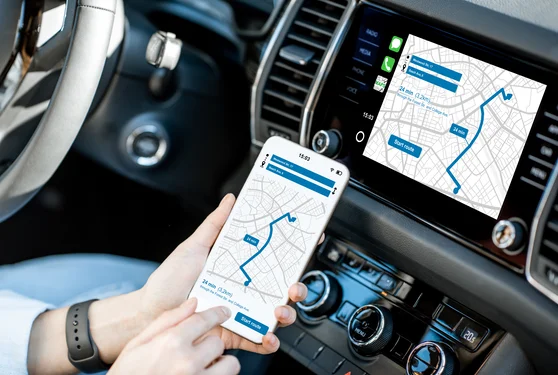
- Geolocation Services & Real-time Tracking: This is the bedrock of the entire operation. We're talking about leveraging powerful APIs like Google Maps API or Mapbox for real-time GPS tracking. The system uses advanced algorithms for geofencing (defining virtual geographic boundaries) and route optimization. When a user requests a ride, the system's dispatch algorithm, often powered by machine learning, calculates the optimal driver-rider match based on proximity, traffic data, and driver availability. This isn't just a dot on a map; it's a dynamic, constantly updating data stream.
- Backend & Data Infrastructure: The backend is the brain of the operation. It's where the magic happens. We're talking about robust backend frameworks like Node.js, Python, or Ruby on Rails, and scalable databases like PostgreSQL or MongoDB. This infrastructure is designed to handle a massive volume of concurrent requests. It's a distributed system, often hosted on cloud platforms like AWS, Google Cloud, or Azure, which allows for auto-scaling. This means the system can automatically allocate more computational resources during peak demand (like Friday night rush hour) and scale back down during off-peak times, optimizing your infrastructure costs.
- Secure Payment Gateways: In the US, cashless is king. A successful mobility platform needs seamless and secure payment integration. This involves integrating with payment gateways like Stripe or Braintree. The platform also needs to be compliant with regulations like PCI DSS (Payment Card Industry Data Security Standard) to ensure every transaction is secure and user data is protected. A robust system will also offer features like in-app wallets and multi-currency support, setting you up for future expansion.
- Push Notifications & In-App Communication: To keep both riders and drivers in the loop, the system relies on powerful messaging services. Firebase Cloud Messaging (FCM) or Twilio are often used to send real-time push notifications for ride requests, driver arrivals, and payment confirmations. This real-time, asynchronous communication is critical for a smooth user experience.
Analytics & Business Intelligence: This is where you gain your competitive edge. The admin dashboard is not just a control panel; it's a powerful business intelligence suite. You get access to a rich analytics dashboard that provides insights on key metrics like ride volume, peak hours, driver earnings, and customer retention. This data is your superpower. It allows you to implement dynamic pricing (or "surge pricing") based on real-time demand-supply equilibrium, optimize driver incentive programs, and identify new market opportunities.

The Business Canvas: A Proven Model
Let's talk business. The Uber clone model operates on a well-defined and validated business model canvas:
- Key Partners: Drivers (your independent contractors), payment gateways, and cloud service providers.
- Key Activities: Platform management, driver and rider acquisition, marketing, and customer support.
- Value Propositions:
- For Riders: Convenience, on-demand service, transparent pricing, and safety features.
- For Drivers: Flexible earning opportunities, access to a large user base, and a seamless earnings dashboard.
- Customer Relationships: Primarily a self-service model facilitated by the app, but with a robust support system for resolving disputes and ensuring safety.
- Customer Segments: Urban commuters, tourists, business travelers, and individuals needing a flexible transport option.
- Key Resources: The technology platform, the network of drivers, and the brand.
- Channels: The mobile apps (iOS & Android) and digital marketing.
- Cost Structure: Technology infrastructure (cloud hosting, APIs), marketing and driver acquisition costs, customer support, and administrative overhead.
- Revenue Streams:
- Commission per ride: A percentage of the fare, which is your primary revenue source.
- Surge pricing: Adjusting fares during high-demand periods to balance supply and demand.
- Subscription plans: Offering premium packages for drivers or riders with added benefits.
- In-app advertisements: Partnering with local businesses for targeted ad placements.
- Corporate ride solutions: Offering services to businesses for their employees.
This is a model that has been perfected over a decade. It's not a guess; it's a formula for profitability.

Why Now is the Perfect Time to Launch
The ride-hailing market is projected to continue its explosive growth. In 2024, the global ride-hailing market was valued at around $150.34 billion, and it's projected to grow to over $235 billion by 2029. But the landscape is evolving, and this is your opportunity to disrupt it.
- Micro-mobility & Hyperlocal Solutions: While Uber and Lyft dominate the national stage, there's a massive market for hyperlocal and niche services. Think about a university campus, a suburban community, or a specific metropolitan area with a unique traffic pattern. The Uber clone model is flexible enough to be adapted for micro-mobility (scooters, bikes) or a specific fleet of vehicles (e.g., luxury cars, accessible vehicles).
- Sustainability is a Differentiator: The shift to electric vehicles (EVs) is a huge trend. You can build a brand around being an eco-conscious mobility platform by focusing on a fleet of electric vehicles. The technology is already there to integrate with EV charging networks and optimize routes for battery life.
Enhanced Safety & Security: User trust is paramount. Modern clone solutions come with advanced safety features like an SOS button, driver-rider rating systems, and real-time identity verification. You can build on this foundation to create a platform that is perceived as safer and more reliable than the competition.

The Bottom Line
So, why does the Uber clone model still work? Because it’s not about cloning a brand; it’s about leveraging a mature, proven, and scalable technological framework to build your own brand. It drastically reduces your development costs and time-to-market, allowing you to focus on your unique market strategy—be it a driver-centric approach, a niche service, or a specific geographic focus.
At Mobility Infotech, we're not just selling you a product; we're giving you the keys to a high-octane machine. You bring the vision, the brand, and the market insights. We'll provide the technology and the expertise to get you on the road, leaving the competition in the rearview mirror.
Ready to build the future of mobility? Let's talk.
Join 6,000+ marketers and subscribe to our weekly newsletter for exclusive social media news, tips and insights you need to boost results.

David Shane
Hi, I’m David Shane — a passionate content writer based in the USA with a sharp eye for storytelling and a strong command of digital communication. With over 10 years of experience crafting compelling content across industries, I specialize in turning complex ideas into clear, engaging narratives that connect with readers and convert browsers into buyers. Whether it’s SEO-optimized blog articles, persuasive website copy, or thought leadership pieces, I blend creativity with strategy to deliver content that not only reads well but also performs. My writing is grounded in research, powered by empathy, and refined through experience, ensuring that every piece aligns with the brand voice while delivering real value to the audience.