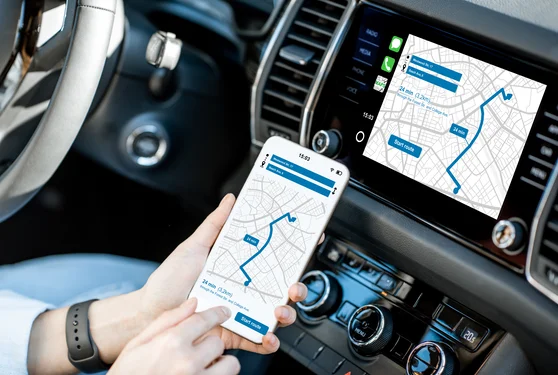

The booming ride-hailing industry, largely popularized by giants like Uber and Lyft, has inspired countless entrepreneurs and businesses to launch their own taxi services. While the dream of building a custom taxi app from the ground up, tailor-made to every minute specification, might seem appealing, it's often a long, costly, and complex endeavor. For many, especially startups and established companies looking for rapid market entry, building a taxi app from scratch is simply not the most efficient or viable option.
At Mobility Infotech, we understand the intricacies of mobile app development and the strategic decisions involved in launching a successful ride-hailing platform. This blog explores compelling alternatives to building a taxi app from scratch, offering pathways that are more cost-effective, time-efficient, and equally robust.
Introduction to the Challenge of Building from Scratch
The allure of developing a fully unique, bespoke taxi app is understandable. It promises complete control over features, design, and scalability. However, this path is fraught with significant hurdles. The resources required – in terms of time, budget, and specialized technical talent – are substantial. From intricate backend infrastructure to complex real-time GPS tracking, secure payment gateways, and robust user management, every component demands expert development. This extensive undertaking often leads to prolonged development cycles and unforeseen expenses, making it a risky proposition for businesses seeking agility and speed to market.

Understanding the "From Scratch" Dilemma
When we talk about building a taxi app from scratch, we're discussing a comprehensive project involving several critical components:
- User Apps: Separate applications for passengers (booking, tracking, payments) and drivers (accepting rides, navigation, earnings).
- Admin Panel: A powerful web-based dashboard for managing drivers, passengers, trips, payments, and analytics. This often includes features for employee transportation software or fleet management.
- Backend Infrastructure: The server-side logic, databases, and APIs that power the entire system, handling millions of requests daily.
- Real-time Capabilities: Features like live GPS tracking, instant notifications, and dynamic pricing require sophisticated real-time data processing.
- Security & Compliance: Ensuring data privacy (e.g., GDPR, HIPAA if applicable for health-related transport), secure transactions, and protection against fraud.
The average cost to build a taxi app like Uber majorly depends on how feature-rich it is, whether it is an enterprise-level solution, if the development timelines stretch from 8 to 18 months, or even longer. This substantial investment of time and capital necessitates exploring viable alternatives.

The Power of White-Label Taxi App Solutions
One of the most popular and effective alternatives to ground-up development is opting for a white-label taxi app solution. A white-label solution is a pre-built, fully functional software platform that can be rebranded and customized with your company's logo, colors, and specific features.
Key Advantages:
- Faster Time-to-Market: Since the core development is already done, you can launch your branded app in weeks, not months. This allows for rapid entry into the competitive ride-hailing market.
- Cost-Efficiency: Significant cost savings are achieved by leveraging existing code and infrastructure, drastically reducing upfront development expenses.
- Proven Reliability: White-label solutions are typically pre-tested and refined, minimizing bugs and ensuring stability.
- Scalability: These platforms are usually built to handle growth, easily accommodating an increasing number of users and drivers.
- Maintenance & Updates: The white-label provider often handles ongoing maintenance, bug fixes, and feature updates, relieving you of a major operational burden.
A robust white-label taxi app solution comes with essential modules like passenger apps, driver apps, and an admin panel, often with features comparable to an Uber clone app, but designed for quick branding and deployment.

Leveraging Taxi App Clone Scripts
Closely related to white-label solutions are taxi app clone script options. These are essentially ready-made codebases that replicate the core functionalities of successful ride-hailing apps like Uber. While a white-label solution is more of a ready-to-deploy, customizable product offered by a service provider, a clone script is the underlying code that you acquire and then further develop or customize yourself.
Benefits of Clone Scripts:
- Foundation for Customization: A clone script provides a strong foundation, allowing you to add unique features or tailor the user experience more extensively than a typical white-label offering.
- Reduced Development Time: You bypass the initial phase of building core functionalities from scratch.
- Cost-Effective Entry: Generally less expensive than full custom development, though higher than a pure white-label subscription.
However, utilizing a taxi app clone script often requires in-house technical expertise or the engagement of a development team for effective customization, integration, and ongoing maintenance. The quality of the clone script can vary significantly, so choosing a reputable provider is crucial.

The Rise of No-Code/Low-Code Platforms
For businesses with minimal technical expertise or a very tight budget, no-code and low-code platforms are emerging as intriguing possibilities. These platforms allow users to build applications using visual interfaces with drag-and-drop functionality, significantly reducing or eliminating the need for traditional coding.
Advantages:
- Extremely Fast Prototyping: Quickly build and test basic app concepts.
- Low Cost: Drastically reduces development costs.
- Accessibility: Empowers non-developers to create applications.
Limitations:
- Limited Customization: Highly complex or unique features may be difficult or impossible to implement.
- Scalability Concerns: May not be suitable for large-scale operations with high user traffic.
- Vendor Lock-in: You are often dependent on the platform's ecosystem.
While a full-fledged taxi app with real-time tracking, complex dispatch algorithms, and secure payment gateways might be challenging to build entirely on a no-code platform, they can be useful for developing complementary apps or initial MVPs (Minimum Viable Products).

Hybrid Approaches: Customization on a Solid Base
A powerful middle-ground approach involves combining the benefits of pre-built solutions with a degree of custom development. This often entails starting with a robust white-label taxi app solution or a high-quality taxi app clone script and then investing in strategic custom enhancements.
This hybrid model allows businesses to:
- Achieve Rapid Launch: Benefit from the immediate availability of core features.
- Incorporate Unique Selling Propositions: Add specific functionalities that differentiate their service in the market.
- Optimize for Local Market Needs: Customize features to suit regional preferences, payment methods, or regulatory requirements.
- Integrate Advanced Technologies: Implement cutting-edge features like AI chatbots for customer support or predictive analytics for demand forecasting, leveraging the scalability of the base platform.
Mobility Infotech often recommends this approach, leveraging its expertise to provide a strong base while adding bespoke elements that truly make the app stand out.

Beyond the App: The Importance of a Robust Dispatch System
Regardless of the development approach, the success of any ride-hailing service hinges on a sophisticated taxi dispatch system. This backend powerhouse is the brain of your operation, managing everything from driver assignments and route optimization to real-time tracking and customer support.
A robust dispatch system typically includes:
- Automated Dispatching: Algorithms that intelligently assign rides to the nearest or most suitable driver.
- Fleet Management: Tools for managing driver profiles, vehicle details, and documents.
- Real-time Monitoring: A live map view of all active vehicles and ongoing rides.
- Reporting & Analytics: Comprehensive data on trips, earnings, driver performance, and peak hours.
- Customer Support Tools: Features for managing bookings, resolving disputes, and providing quick assistance.
Modern dispatch systems often incorporate AI chatbots to handle common customer inquiries, reducing the load on human support staff and providing instant responses. They are designed to seamlessly integrate with both the passenger and driver apps, ensuring a smooth and efficient workflow.

Summary
For businesses aiming to launch a ride-hailing service, building a taxi app from scratch is often cost-prohibitive and time-consuming. Viable alternatives include white-label taxi app solutions, which offer rebrandable, pre-built platforms for rapid deployment and cost savings. Similarly, acquiring a taxi app clone script provides a foundational codebase for more extensive customization. No-code/low-code platforms can support basic app functions or MVPs. A hybrid approach, combining a pre-built solution with custom enhancements, often delivers the best balance of speed, cost, and uniqueness. Regardless of the development path, a powerful taxi dispatch system is essential for operational efficiency, often incorporating features like AI chatbots for enhanced support. These alternatives enable faster market entry and greater agility in the competitive ride-hailing landscape.
Ready to revolutionize your transportation business with a cutting-edge taxi app solution? Mobility Infotech specializes in developing robust, scalable, and user-friendly platforms tailored to your needs. From white-label deployments to custom integrations and advanced AI features, their experts guide you through every step. Contact Mobility Infotech today to discuss your project and turn your vision into a reality.
Join 6,000+ marketers and subscribe to our weekly newsletter for exclusive social media news, tips and insights you need to boost results.