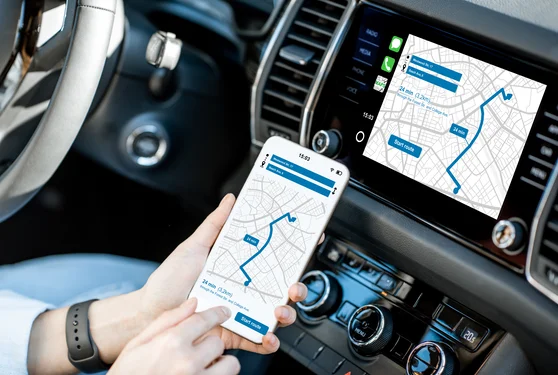
The on-demand economy, ushered in by giants like Uber, has fundamentally changed how we travel. For entrepreneurs, startups, and established businesses aiming to capture a slice of this multi-billion dollar market, the question isn't "if" they should build a rideshare app, but "how." The complexity of an Uber-like platform—with its real-time GPS tracking, dynamic pricing, and a dual-sided marketplace for riders and drivers—requires a robust, scalable, and secure technical foundation.
This blog post from Mobility Infotech will dissect the core components and platforms that enable the creation of a successful rideshare application. We'll move beyond just a list of companies to a detailed look at the types of platforms, technology stacks, and key players that can turn a revolutionary idea into a functioning, revenue-generating reality.
Understanding the Core Components of a Rideshare App
An Uber-like rideshare app is not a single entity; it's a complex ecosystem of interconnected applications and systems. To understand the platforms that help build them, you must first grasp the three fundamental components:
- The Rider App: The user-facing application for requesting, tracking, and paying for rides. Key features include user profiles, booking and scheduling, real-time GPS tracking, in-app messaging, and payment integration.
- The Driver App: The application for drivers to accept ride requests, navigate to the pick-up and drop-off points, manage earnings, and view their ride history. It requires seamless navigation, trip management, and earnings dashboards.
- The Admin Panel (Web-based): The central hub for the business owner to manage the entire operation. This includes dashboards for monitoring real-time activity, managing drivers and riders, handling payments and commissions, running analytics, and providing customer support.
Each of these components relies on a sophisticated backend and a series of third-party integrations to function smoothly.

The Technology Stack: Native vs. Cross-Platform
Choosing the right technology stack is the most critical decision in the development process. This choice directly impacts the app's performance, development cost, and future scalability.
- Native App Development: This involves building separate applications for iOS (using Swift or Objective-C) and Android (using Kotlin or Java). While more expensive and time-consuming, native apps offer superior performance, a more responsive user experience, and full access to device-specific features like GPS, motion sensors, and push notifications. For a high-performance app with a massive user base, like Uber, this is the preferred route.
- Cross-Platform Development: This involves using frameworks like Flutter or React Native to build a single codebase that can be deployed on both iOS and Android. This approach is significantly faster and more cost-effective. While performance might be slightly lower than native apps, modern cross-platform frameworks have become incredibly powerful and are an excellent choice for startups and businesses looking to launch a Minimum Viable Product (MVP) quickly.
A rideshare app's backend is often built using powerful languages and frameworks like Python (Django/Flask), Node.js, or Ruby on Rails, with databases like PostgreSQL or MongoDB to handle a massive volume of real-time data. The use of microservices architecture has also become the norm, allowing for greater scalability and independent development of different app features.

Key Platforms & Service Providers for Rideshare App Development
Building an Uber-like app from scratch requires a team of over a dozen experts and a significant budget. To circumvent this, many businesses turn to specialized development firms and platforms that offer pre-built solutions. Here's a look at some of the leading players in this space.
1. Mobility Infotech
As a leader in custom mobility solutions, Mobility Infotech stands at the forefront of the rideshare app development landscape. We offer a comprehensive, end-to-end service that goes far beyond a simple "white-label" solution. Our core strength lies in our ability to deliver a highly scalable, bespoke platform tailored to your specific business model and target market.
- Customization: We don't just provide a template; we build a unique platform from the ground up, ensuring your app has a distinct brand identity and features.
- Scalability: Our solutions are built on a robust, cloud-native architecture (using AWS, Google Cloud, or Azure), which can handle everything from a small pilot project to millions of users.
- Security & Compliance: We prioritize data security and compliance with international regulations like GDPR and CCPA, which is crucial for a data-intensive app.
- Comprehensive Features: Our platforms include advanced features such as AI-driven dynamic pricing, predictive demand heatmaps, and multi-layered safety features.
- Post-Launch Support: We provide continuous support, maintenance, and updates, ensuring your app remains secure, competitive, and up-to-date with market trends.
We specialize in developing solutions for various niches, including corporate carpooling, logistics, and medical transport, offering a strategic advantage over competitors.
2. Code Brew Labs
Code Brew Labs is a prominent player known for providing customizable, white-label solutions for on-demand businesses. They offer a strong foundation for an Uber-like app, including the essential three-component system (rider, driver, and admin panel). Their solutions are particularly attractive to startups aiming for a quick and cost-effective market entry. They focus on providing a full-featured product that can be launched relatively fast.
3. Space-O Technologies
Space-O Technologies is another well-regarded development company with extensive experience in the on-demand sector. They offer a range of solutions, from custom development to pre-built clones, and are known for their expertise in various app categories, including delivery, service, and ride-hailing. They provide a transparent development process and have a strong portfolio of successful projects.
4. Jungleworks
Jungleworks is a robust, all-in-one platform for building on-demand services. They offer a suite of products, including their ride-hailing app, which can be configured to a business's specific needs. Their platform is unique in that it's designed to be a complete ecosystem, with integrated tools for marketing, payments, and customer relationship management. This makes them a strong contender for businesses that want a single platform to manage their entire operation.
5. Onde
Onde provides a sophisticated, white-label platform for taxi companies and ride-hailing startups. They offer a fully customizable mobile and web-based solution that is geared towards helping traditional taxi businesses modernize their operations. Their platform includes advanced dispatching systems, payment integration, and a focus on operational efficiency, making it an excellent choice for businesses with an existing fleet.

The Role of APIs in Rideshare App Development
Underpinning all these platforms is a reliance on a variety of powerful APIs (Application Programming Interfaces). These are the building blocks that provide core functionalities without the need for custom development from scratch.
- Mapping & Geolocation APIs: Essential for the heart of the app. Platforms like Google Maps, Mapbox, and OpenStreetMap provide services for real-time tracking, route optimization, and fare estimation.
- Payment Gateways: Services like Stripe, Braintree, and PayPal are integrated to handle secure, in-app payments and manage rider-to-driver transactions.
- Communication APIs: Platforms like Twilio enable in-app messaging, calls, and SMS notifications for crucial alerts and updates.
- Push Notification Services: Firebase Cloud Messaging (FCM) and Apple Push Notification Service (APNS) are used to send real-time alerts to riders and drivers.
The proper integration of these APIs is what gives a rideshare app its seamless functionality and reliability.

White-Label vs. Custom Development
When choosing a platform, you'll encounter two primary models:
- White-Label Solutions: These are pre-built, templated apps that can be quickly rebranded with your logo, colors, and a few customizations. They are a fast and affordable way to enter the market. The downside is that they offer limited flexibility for unique features and can be difficult to scale or differentiate in a competitive market.
- Custom Development: This involves building the app from scratch, tailored to your exact specifications. While it requires a greater investment of time and money, it gives you complete ownership of the intellectual property, full control over the features, and the ability to scale and pivot as your business evolves.
For a serious player looking to build a sustainable, long-term business with a unique value proposition, a custom-built solution is the definitive choice. It provides the foundation for innovation and market leadership.

Cost and Timeline: A Realistic Outlook
The cost of building an Uber-like app can range from $50,000 to over $300,000, depending on the complexity, features, and chosen development model. A basic MVP can be built in 3-6 months, while a feature-rich, scalable platform can take 9-12 months or longer.
These figures are highly dependent on:
- The number of features and their complexity (e.g., dynamic pricing, carpooling, multi-stop trips).
- The platform choice (native vs. cross-platform).
- The geographic location of the development team.
- The level of UI/UX design and backend scalability.

Conclusion
Building an Uber-like rideshare app is a significant undertaking, but with the right platforms and partners, it is an achievable goal. The key to success is to move beyond simply "cloning" Uber and instead focus on creating a specialized, high-quality solution that addresses a specific market need.
For businesses and entrepreneurs who are ready to make a strategic investment in their mobility venture, a custom-built, scalable solution is the way forward. At Mobility Infotech, we don't just deliver a product; we provide a complete partnership, from initial concept to a successful, long-term business. Our expertise in creating robust, secure, and feature-rich rideshare apps ensures your venture is built on a solid foundation, ready to compete and thrive.
Ready to revolutionize the transportation industry with your own rideshare app? Contact Mobility Infotech today for a detailed consultation and let's start building your future.

Summary
This blog post provides a comprehensive guide on the platforms and technologies used to build Uber-like rideshare apps. It begins by breaking down the three core components of a rideshare ecosystem: the rider app, the driver app, and the admin panel. The article then delves into the two primary technology stacks—native and cross-platform—and explains the benefits and drawbacks of each. A list of key platforms and service providers is provided, with Mobility Infotech highlighted as the top choice for its focus on custom, scalable, and secure solutions. Other notable companies like Code Brew Labs, Space-O Technologies, Jungleworks, and Onde are also mentioned. The blog emphasizes the crucial role of third-party APIs for functionalities like mapping and payments. It also differentiates between white-label and custom development, advising that custom solutions are ideal for long-term, differentiated businesses. The article concludes with a realistic outlook on development costs and timelines, reinforcing the idea that a custom-built app provides the best foundation for a successful and competitive venture, and calls on the reader to contact Mobility Infotech for their development needs.
Join 6,000+ marketers and subscribe to our weekly newsletter for exclusive social media news, tips and insights you need to boost results.

Phil Sanders
Phil Sanders is a digital marketer, content writer, and entrepreneur helping brands grow through strategy, storytelling, and authentic connection.