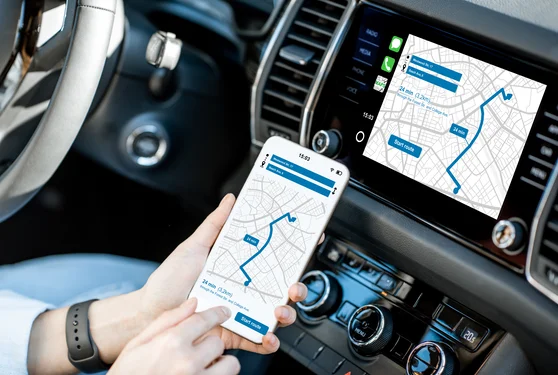
In today's fast-paced world, our way of moving is constantly evolving. From bustling urban centers to interconnected communities, efficient and accessible transportation solutions are no longer a luxury—they are a necessity. For ambitious businesses seeking to make their mark in the dynamic rideshare industry, the traditional path of building complex technological infrastructure from scratch can be a daunting, time-consuming, and resource-intensive challenge. But what if there was a more innovative, faster way to launch your branded mobility service and seamlessly connect riders with drivers, all while maintaining complete control over your brand identity? Welcome to the powerful realm of white-label rideshare software solutions, a game-changing approach that is democratizing access to cutting-edge mobility technology.
Introduction: Navigating the New Age of Mobility
In the rapidly evolving landscape of urban transportation, the demand for agile, efficient, and branded mobility solutions has never been higher. For businesses looking to enter or expand within the rideshare market, building an entire tech stack from scratch is often a prohibitive endeavor. This is where white-label rideshare software solutions emerge as a game-changer, offering a pre-built, customizable framework that empowers companies to launch their own branded ride-hailing services with unprecedented speed and cost-efficiency.
At Mobility Infotech, we understand the intricate dynamics of this domain, and we champion the strategic adoption of white-label platforms to accelerate market entry and foster sustainable growth.
Understanding White-Label Rideshare Software
At its core, white-label software is a product or service developed by one company (the provider) that another company (the reseller) rebrands to appear as if it were their own. In the context of ridesharing, this means you acquire a fully developed, robust, and tested application suite—comprising a Rider App, Driver App, and a comprehensive Admin Panel—and customize it with your unique branding, logos, and specific feature sets. Think of it as acquiring a high-performance vehicle chassis that you can then outfit with your bespoke interior and exterior. This approach significantly democratizes access to advanced mobility technology, allowing businesses of all sizes to compete effectively.

The Technical Backbone: Architecture and Key Components
White-label rideshare solutions are engineered for scalability and reliability, leveraging modern software architecture paradigms. Many operate on a SaaS (Software-as-a-Service) model or a cloud-based architecture, providing a multi-tenant environment where a single infrastructure serves numerous clients, each with their isolated data and branding. This model inherently ensures high availability and fault tolerance, as the underlying infrastructure is managed and maintained by the provider.
Key architectural components typically include:
- Microservices Architecture:
Instead of a monolithic application, functionalities are broken down into smaller, independent services. For example, user management, booking, payment processing, and real-time tracking are separate microservices. This modularity enhances scalability (you can scale individual services independently), resilience (failure in one service doesn't necessarily bring down the whole system), and allows for independent development and deployment of features. It’s like having specialized teams for each part of a car, rather than one giant team building everything.
- Robust APIs (Application Programming Interfaces):
These serve as the backbone for seamless communication between the rider app, driver app, admin panel, and various third-party integrations. We’re talking about connecting with payment gateways (like Stripe, PayPal, Razorpay), mapping services (like Google Maps, OpenStreetMap), and communication platforms. The prevalent use of RESTful APIs ensures efficient, standardized data exchange, making integration with other systems straightforward and secure.
- Cloud Infrastructure:
Platforms are typically hosted on leading cloud service providers, such as AWS (Amazon Web Services) or DigitalOcean. This isn't just about storage; it provides elastic scalability, allowing the system to automatically adjust computing resources (CPU, memory, network bandwidth) based on real-time user demand. This ensures optimal performance even during peak hours, preventing slowdowns or crashes when demand surges.
- Databases and Caching Mechanisms:
A combination of relational databases (e.g., MySQL, for structured data such as user profiles) and NoSQL databases (e.g., MongoDB, Cassandra) often underpin these systems for efficient data storage and retrieval. Redis is commonly used for caching, which temporarily stores frequently accessed data in high-speed memory, dramatically reducing database load and speeding up data access for a snappier user experience.
- Message Queues (e.g., Apache Kafka):
These asynchronous communication protocols are essential for handling high volumes of real-time data, including ride requests, driver locations, and notifications. By decoupling the sending and processing of messages, they ensure system responsiveness and reliability, even under heavy load. Imagine a super-efficient postal service for internal system communications.
- Security Protocols:
Data protection is paramount. This involves rigorous implementation of data encryption (e.g., 128-bit AES, MD5 encryption for data at rest and in transit), SSL APIs for secure communication channels, and robust authentication/authorization protocols to protect sensitive user and transaction data from unauthorized access.

A Feature-Rich Ecosystem: Empowering Riders, Drivers, and Admins
A top-tier white-label rideshare solution offers a comprehensive suite of features designed to enhance the experience for all stakeholders:
For Riders:
- Intuitive Booking & Scheduling:
A sleek UI/UX (User Interface/User Experience) for effortlessly setting pick-up/drop-off locations, selecting various vehicle types (e.g., sedan, SUV, electric), and even scheduling rides in advance.
- Real-time GPS Tracking:
Riders can track their assigned vehicle's location in real-time on a map, receiving accurate ETA (Estimated Time of Arrival) updates, which reduces anxiety and improves coordination.
- Multiple Payment Gateways:
Integration with a variety of digital payment options, including in-app wallets, major credit/debit cards, and local payment methods like UPI (Unified Payments Interface) in India, offering maximum convenience.
- In-app Communication:
Secure chat or call functionality is directly integrated within the app, enabling riders and drivers to communicate privately without sharing personal contact information.
- Dynamic Fare Estimation & Surge Pricing:
Sophisticated algorithms calculate fares in real-time based on distance, time, and, crucially, demand-supply dynamics. This enables surge pricing during peak hours, balancing supply and demand.
- Comprehensive Ride History & Digital Receipts:
Riders can easily access detailed records of all past trips and receive digital invoices for expense management.
- SOS Button:
A critical emergency feature for immediate assistance, connecting riders to predefined contacts or emergency services with a single tap.
For Drivers:
- Trip Request Alerts & Acceptance:
Real-time push notifications for new ride requests, displaying essential trip details (pickup location, destination, estimated fare) with clear options to accept or decline.
- Optimized Navigation:
Integrated GPS and sophisticated route optimization algorithms suggest the most efficient routes, taking into account real-time traffic data, road closures, and providing optimal turn-by-turn directions.
- Transparent Earnings Tracking & Payout Management:
Drivers get a clear overview of their daily/weekly earnings, trip breakdowns, and automated payout systems, ensuring transparency and timely payments.
- Availability Toggle:
Drivers can easily switch their online/offline status, giving them complete control over their working hours and availability.
For Administrators (The Control Tower):
- Centralized Dashboard:
A holistic, real-time view of all operations, including active rides, driver status, earnings, user activity, and system health metrics. This acts as the command center for your entire operation.
- User & Driver Management:
Robust tools for seamless onboarding, rigorous verification processes, performance monitoring, rating management, and efficient customer/driver support.
- Dispatching & Fleet Management:
Capabilities range from fully automated dispatching based on proximity and driver availability to manual intervention when needed. Includes vehicle categorization, maintenance tracking, and compliance management.
- Advanced Analytics & Reporting:
Data-driven insights into key performance indicators (KPIs) like trip volume, revenue per ride, driver efficiency, customer satisfaction scores, and heatmaps of demand. These are crucial for strategic decision-making and identifying growth opportunities.
- Promotions & Marketing Tools:
Configuration of promo codes, loyalty programs, referral rewards, and targeted push notification campaigns to attract and retain both riders and drivers.

Strategic Advantages: Why Choose White-Label for Your Mobility Venture?
The advantages are compelling, especially for businesses seeking rapid market penetration and operational efficiency:
Accelerated Time-to-Market:
This is arguably the most significant benefit. You skip the lengthy, complex, and resource-intensive development cycles associated with building a custom platform from scratch. A white-label solution allows you to launch your branded service in weeks, not months or even years, enabling you to start generating revenue and capturing market share much faster.
Significant Cost Savings:
Developing a custom rideshare platform, with its intricate backend, multiple apps, and real-time functionalities, can easily cost hundreds of thousands to millions of dollars. White-label solutions drastically reduce your upfront capital expenditure by leveraging pre-built, proven infrastructure and sharing the ongoing maintenance costs with other clients of the provider.
Reduced Development Risks:
The core functionality of white-label platforms is already tested, refined, and deployed in real-world scenarios. This significantly minimizes the risk of technical glitches, security vulnerabilities, or performance issues that often plague bespoke development projects, allowing you to focus on your business strategy.
Scalability and Flexibility:
Built with scalability in mind, these platforms can effortlessly accommodate rapid growth in your user base and fleet size without requiring major re-engineering. Their modular nature, enabled by microservices, also allows for the seamless integration of new features or customization to meet evolving market demands and competitive pressures.
Focus on Core Business Operations:
By entrusting the complex technical backend to an expert provider, your team can concentrate its valuable resources and energy on what truly drives success: customer acquisition strategies, efficient driver recruitment and management, localized marketing campaigns, and refining the overall user experience. You manage the business, not the code.
Brand Identity and Customization:
Although they are "pre-built," leading white-label providers offer extensive customization options. You can imbue the apps with your unique brand aesthetics, color schemes, logos, and even tailor specific operational workflows to align perfectly with your business model and local market nuances. It's your brand, powered by their tech.

The Mobility Infotech Edge: Your Partner in Rideshare Innovation
At Mobility Infotech, we specialize in empowering businesses with cutting-edge white-label solutions that are not just technically robust but also strategically aligned with your growth objectives. Our deep industry insights, agile implementation methodologies, and unwavering commitment to leveraging advanced technologies ensure that your rideshare platform is not only competitive but also future-proof. We're here to guide you through the intricacies, from initial setup to ongoing support, ensuring a smooth and successful launch.
Whether you're a startup looking to make an immediate impact or an established player seeking to diversify your mobility offerings, partnering with a white-label expert can be the catalyst for your success. It's about smart technology adoption, enabling you to deliver a superior user experience and capture significant market share without the exorbitant overheads of ground-up development.

Conclusion
The landscape of modern mobility is dynamic, demanding agile and robust solutions for businesses venturing into or expanding within the rideshare domain. White-label rideshare software emerges as a strategic imperative, offering a pre-engineered, customizable, and scalable platform that significantly reduces time-to-market and development costs. Embracing white-label technology is not just about launching an app; it's about strategically positioning your business for sustainable success in the competitive rideshare market.

Comprehensive Summary
This blog post explores the transformative power of white-label rideshare software solutions for businesses seeking to enter or expand their presence in the mobility sector. These pre-built, customizable platforms provide a rapid and cost-effective alternative to in-house development, enabling quick market entry with branded Rider Apps, Driver Apps, and Admin Panels.
Technically, these solutions leverage advanced architectures, including microservices for modularity and scalability, cloud infrastructure (such as AWS and Digital Ocean) for elastic resource management, and robust APIs for seamless integration with payment gateways and mapping services. They utilize NoSQL/relational databases, as well as caching mechanisms (Redis), for efficient data handling, along with message queues (Kafka) for real-time communication. Rigorous security protocols, such as AES encryption and SSL APIs, ensure data integrity and user safety.
The feature set is extensive, catering to all stakeholders: riders benefit from intuitive booking, real-time GPS tracking, diverse payment options, and in-app communication; drivers enjoy optimized navigation, precise earnings tracking, and flexible availability; while administrators gain a centralized dashboard for managing users, fleets, dispatching, and leveraging advanced analytics for strategic decision-making and promotions.
The strategic advantages of adopting white-label solutions are compelling: significantly accelerated time-to-market, reduced development costs and risks, inherent scalability and flexibility, the ability to focus on core business operations, and powerful brand identity customization. For businesses, this means a faster ROI and a competitive edge.
Mobility Infotech stands as a key partner in this domain, offering expertise and cutting-edge white-label solutions that align with growth objectives, guiding businesses from initial setup to successful market launch and beyond.
Join 6,000+ marketers and subscribe to our weekly newsletter for exclusive social media news, tips and insights you need to boost results.

Phil Sanders
Phil Sanders is a digital marketer, content writer, and entrepreneur helping brands grow through strategy, storytelling, and authentic connection.