
How a BlaBlaCar Clone App Can Solve Ghana’s Tro-Tro Overcrowding Crisis
 Jackson Scott
 June 24, 2026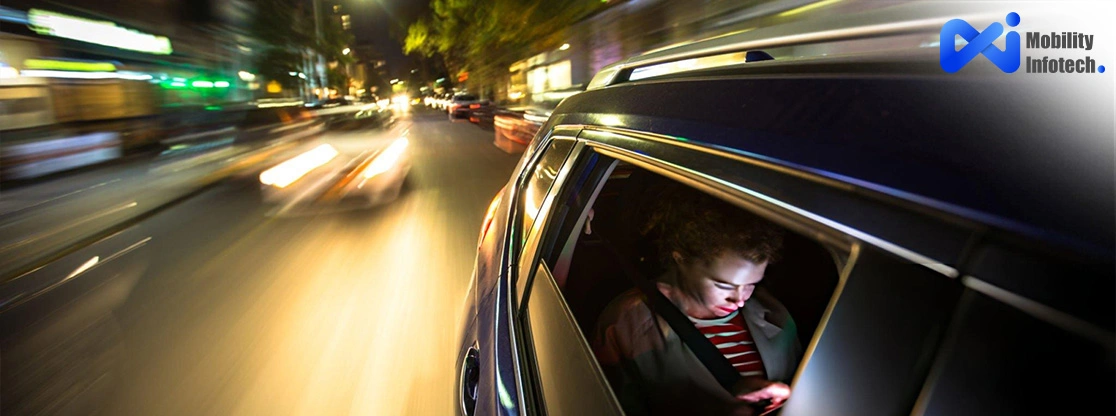
Picture this. It’s 7:12 AM on a Monday in Accra. You’re squeezed between a woman balancing a tray of koko, a businessman shouting into his phone, and a mate hanging halfway out the sliding door yelling “Circle, Circle, Circle!” Sweat trickles. Tempers fray. And somewhere on the Spintex Road, a tro-tro driver swerves into a third lane that technically doesn’t exist. Sound familiar? For millions of Ghanaians, this is not a bad day. This is just Monday. And Tuesday. And every working day of the year.
Something has to give. And surprisingly, the answer is already available as a BlaBlacar clone app, waiting to be reimagined for Ghana people.
The Tro-Tro Crisis Nobody Wants to Talk About Honestly
Let’s drop the polite act. Tro-tros move Ghana, no debate there, but the system is buckling under its own weight. Research shows tro-tros account for nearly 87% of trips within a 5 km radius of Accra, and roughly one million passenger trips happen daily across the city’s paratransit network, which is staggering when you remember most of those vehicles were never designed for that kind of pressure The Conversation. Around 70% of Accra’s major roads stay congested during rush hour, with vehicle speeds crawling below 20 km/h, slower than a determined goat. Add the fact that Ghana’s urban mobility crisis is estimated to bleed the economy of about GH¢4.5 billion in productivity losses, and you start to see the scale of the problem Citi FM. This isn’t inconvenience. This is an economic wound that gets reopened every single morning.
So Why Hasn’t Anyone Cracked This Yet?
Good question. Uber arrived. Bolt arrived. Yango arrived. Yet for the average teacher in Madina or trader in Kasoa, hailing a private ride to work daily is financially unrealistic, and the tro-tro remains the only option that fits a GH¢ 800 monthly salary. The missing piece in Ghana’s mobility puzzle isn’t another taxi app. It’s something that sits between the personal car and the tro-tro. Something cheaper than e-hailing, safer than a packed minibus, and smarter than the chaos we currently call commuting. Enter the carpooling model. Enter a BlaBlaCar clone app, redesigned with Ghanaian roads, Ghanaian wallets, and Ghanaian culture firmly in mind.
What Exactly Is a BlaBlaCar Clone App?
Quick context. BlaBlaCar, the French long-distance carpooling giant, now connects over 100 million users across 22 countries by matching drivers who have empty seats with passengers heading in the same direction (BlaBlaCar Business Model). A BlaBlaCar clone app, is a custom-built ridesharing platform that replicates this proven model while adapting it for a specific market. For Ghana, that means localizing it for Cedi-based payments, mobile money rails like MTN MoMo and Telecel Cash, GPS routing tuned for unpaved shortcuts, and even Twi or Ga language support for drivers who prefer it. It’s not a copy-paste job. It’s a culturally engineered ridesharing engine.
How This Could Actually Fix Ghana’s Overcrowding Problem
Here’s where it gets interesting. Imagine 4 colleagues from East Legon all heading to Airport City every morning. Right now? Four cars. Four parking spots. Four contributions to that infamous Tetteh Quarshie gridlock. With a carpooling app, one car. One parking spot. Three fares shared. Multiply that by even 5% of Accra’s daily commuters and the math becomes magical.
Fewer Vehicles, Cleaner Air, Calmer Streets
Every shared ride is a vehicle pulled off the road, and that ripple effect matters more than people realize. Ghana’s Environmental Protection Agency has consistently flagged Accra’s air quality as a growing public health concern, with vehicle emissions sitting at the top of the contributors list. A BlaBlaCar clone app doesn’t just decongest roads, it directly slashes carbon output per passenger kilometre, which is the kind of measurable environmental win donors, councils, and climate-conscious Gen Z riders all care about deeply right now.
Affordable for the Average Ghanaian Worker
This is the part most ridesharing solutions get embarrassingly wrong in Africa. They price for expats and forget the nurse, the SHS teacher, the call-centre agent. A properly built Bla Bla car clone splits fuel costs between driver and passengers, meaning a ride from Tema to Accra Central could realistically cost 60 to 70% less than a solo Uber, while still putting decent money in the driver’s pocket. It’s not charity. It’s just cleverer economics built on shared seats.
The Tech Stack That Makes It Actually Work
A serious BlaBlaCar clone in 2026 isn’t a website with a map slapped on top. It runs on real-time GPS matching, machine learning algorithms that predict popular routes like Madina to Legon or Kasoa to Kaneshie, in-app wallets integrated with Ghana’s instant payment infrastructure GhIPSS and mobile money APIs, two-way rating systems to weed out reckless drivers, and SOS features tied to local emergency services. At Mobility Infotech, we engineer these systems with offline-first capabilities too, because let’s be real, network coverage between Aflao and Ho is not exactly TED Talk material.
Trust and Safety, the Make or Break Feature
Would your sister use this? That’s the only question that matters. Verified driver KYC using Ghana Card integration, female-only ride options, live trip sharing with family members, and AI-driven fraud detection are non-negotiables now. Build a BlaBla car clone without these and you’re launching a product nobody’s mother will approve of, which means it dies in three months. Trust is the actual product. Everything else is just plumbing around that core promise.
Why Mobility Infotech for Your BlaBlaCar Clone App
We’ve been quietly building ridesharing, taxi, and logistics platforms for African and Middle Eastern markets for years, and we genuinely understand the difference between a Silicon Valley template and a Madina-ready product. Our BlaBlaCar clone solutions come pre-loaded with multi-language support, mobile money integration, dynamic pricing engines, driver onboarding flows tuned for low-literacy users, and admin dashboards that even non-technical founders can manage. You bring the vision for Ghana. We bring the code, the speed, and the launch playbook.
The Road Ahead Is Genuinely Exciting
Will a BlaBlaCar clone app replace the tro-tro? Honestly, no. And it shouldn’t try to. The tro-tro is woven into Ghana’s social fabric in ways an app cannot replicate. But can it absorb 15 to 20% of daily commuters, ease overcrowding, reduce road deaths, and create thousands of side-income opportunities for everyday car owners? Absolutely yes, and the timing has never been sharper. Ghana’s smartphone penetration is climbing. Mobile money is universal. Fuel prices keep biting. The conditions for carpooling adoption are basically lined up like dominos.
Someone is going to build this for Ghana. The only real question is whether you’ll be the one launching it, or watching someone else cut the ribbon. Let’s talk.
Frequently Asked Questions
A BlaBlacar clone app is a custom-built carpooling platform that connects drivers with empty seats to passengers travelling the same route. In Ghana, it splits fuel costs, reduces traffic, and offers affordable daily commuting alternatives.
A fully functional BlaBla car clone typically ranges between $8,000 and $25,000, depending on features like mobile money integration, Ghana Card KYC, multi-language support, and admin dashboards. Mobility Infotech offers flexible packages tailored to startup budgets and timelines.
Yes, a properly built Bla Bla car clone includes female-only ride options, verified driver KYC, live trip sharing, SOS buttons, and two-way ratings. These safety layers make daily commuting in Accra significantly safer than crowded tro-tros today.
Absolutely. Every modern BlaBlacar clone app we build at Mobility Infotech comes pre-integrated with MTN Mobile Money, Telecel Cash, AirtelTigo Money, and GhIPSS rails, ensuring seamless cashless payments for Ghanaian riders and instant payouts for verified drivers nationwide.
Launching a market-ready BlaBla car clone typically takes 6 to 12 weeks, depending on customization depth. Mobility Infotech follows an agile sprint model covering design, development, Ghana-specific localization, testing, and Play Store plus App Store deployment efficiently.

 Mobility Infotech
 October 21, 2026
BlaBlaCar Clone for Intercity Carpooling: Istanbul-Ankara and Sofia-Plovdiv Routes
On 17 August 2026, TCDD Taşımacılık raised its train fares by 6.45%, tak...
Know More Mobility InfotechOctober 14, 2026
White Label Taxi App vs Uber Clone: Which Should European Taxi Operators Choose?
Since 17 June 2024, every driver working through a ride-hailing platform...
Know More Mobility InfotechOctober 14, 2026
Taxi Dispatch Devices and MDTs: A Hardware Guide for UAE Fleets
Apple says iPhones and iPads are designed for use in ambient temperature...
Know More
Business consultant
Tell us about your vision — Taxi, Carpool, Shuttle, Airport Transfer, Car Rental, or Ride-hailing. We'll show you how fast we can get you live.