
Taxi Dispatch Software for Lagos: Fixing Rush-Hour Chaos for Fleets
 Christl Paulsen
 August 4, 2026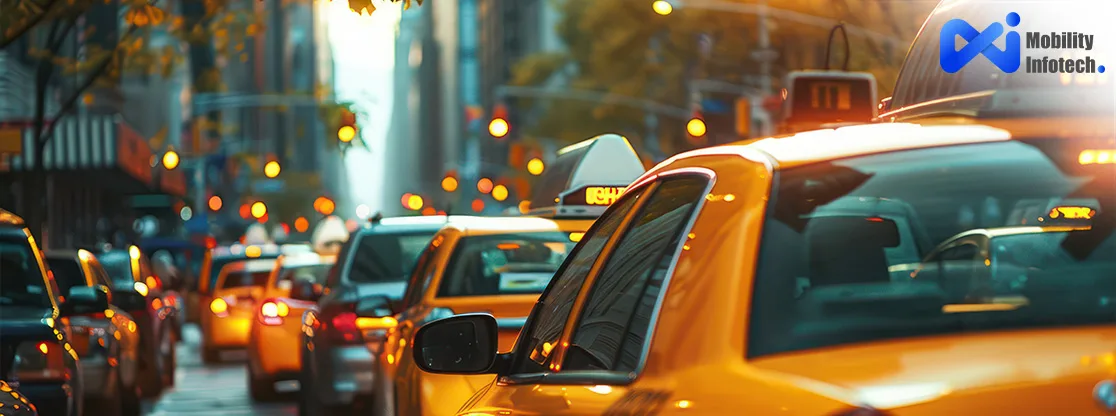
Anyone who has driven through Ikeja at 7 AM knows the drill. Third Mainland Bridge turns into a car park, Oshodi becomes a puzzle nobody can solve, and your drivers are stuck burning fuel while riders cancel one after another. For fleet owners in Lagos, this is not a bad day. This is Tuesday. And honestly, the old way of running things, radios, WhatsApp groups, one manager shouting into a phone, just cannot keep up anymore. Smart taxi dispatch software is what separates fleets that survive Lagos traffic from fleets that quietly bleed money every single month.
Why Lagos Rush Hour Breaks Ordinary Fleets
Lagos is not like other markets. Roughly 20 million people, one of the highest congestion indexes on the continent, and traffic patterns that shift depending on rain, fuel queues, or a single broken-down danfo.
Here is where fleets usually lose:
- Idle drivers in the wrong spot. Three cabs sitting in Yaba while Victoria Island is screaming for rides.
- Manual allocation. Your dispatcher assigns by memory and gut feeling. Gut feeling does not scale past 20 cars.
- No ETA accuracy. Riders get told "10 minutes" and wait 35. They cancel, and they do not come back.
- Fuel wasted on empty kilometres. In a market where fuel prices swing hard, deadhead mileage is pure loss.
- Zero visibility. You genuinely do not know where half your fleet is at any given moment.
Each of these looks small on its own. Stack them across a 60-car fleet over 30 days and you are looking at serious money walking out the door.
What Actually Fixes It
A proper taxi dispatch system does not just assign rides. It thinks ahead. Modern taxi dispatch software built for congested cities works on live data, not last week's assumptions.
What that looks like on the ground:
- Real-time GPS matching that picks the nearest genuinely available driver, not the nearest one on paper
- Traffic-aware routing that reroutes around Apapa gridlock before your driver gets stuck in it
- Demand heat maps so drivers position themselves where rides will actually come from
- Automated dispatch rules so nobody is manually deciding who takes what at 6 AM
- Driver performance tracking to see who is actually earning and who is coasting
We built our platform around one simple idea. If the software cannot handle Lagos, it cannot handle anywhere.
The Money Side Nobody Talks About
Fleet owners often ask us about ride volume. Fair enough. But the bigger win is usually on the cost side.
Good cab dispatch software cuts empty running. It reduces the number of dispatchers you need. It kills disputes over fares because everything is logged. And it gives you the data to actually negotiate with corporate clients, because now you can prove your on-time performance instead of just claiming it.
Quick reality check on what fleets typically see after switching from manual to automated dispatch:
- Shorter pickup times, which directly lowers cancellations
- Better vehicle utilisation across the working day
- Fewer "where is my driver" calls eating your support team alive
- Cleaner records for fuel, maintenance, and driver settlements
That last one matters more than people expect. Solid taxi management software turns your fleet from a guessing game into a business you can actually forecast.
Built For African Conditions, Not Copy-Pasted From Elsewhere
This is where a lot of imported platforms fall flat. They assume perfect internet, universal card payments, and clean addressing systems. Lagos does not work that way.
What a fleet here genuinely needs:
- Offline resilience. Network drops. The app should not.
- Cash, transfer, and card handling. Because riders pay how they pay.
- Landmark-based pickup. "Behind the filling station" is a real address here.
- Low data consumption. Drivers are watching their bundles.
- Local language and pidgin-friendly interfaces. Adoption dies when drivers cannot navigate the app.
At Mobility Infotech, we have spent years working with fleets across Africa, the Middle East, and Asia, and we design with these realities baked in rather than patched on later. Our taxi dispatch system is white-label, so your brand stays front and centre while the tech runs quietly underneath.
A Thought Worth Sitting With
"If you can't measure it, you can't improve it."
Source: Widely attributed to Peter Drucker, management thinker and author.
Why it matters here: Most Lagos fleets run on instinct. Once dispatch data is captured properly, every inefficiency becomes visible, and visible problems are fixable problems. That is the whole shift.
Getting Started Without Blowing Up Your Operation
Nobody wants a migration that halts business for two weeks. Practical rollout looks like this:
- Start with a pilot batch of 10 to 15 vehicles
- Train drivers in small groups, not one big session nobody remembers
- Run manual and automated dispatch side by side for a fortnight
- Watch the numbers, then scale
- Keep one experienced dispatcher on standby during the transition
Straightforward cab dispatch software should be usable by a driver who has never touched a fleet app before. If your team needs a manual, the product has failed.
Wrapping Up
Lagos traffic is not going anywhere. But losing money to it absolutely is optional. The fleets pulling ahead right now are the ones that stopped treating dispatch as a phone job and started treating it as a data problem. The right taxi dispatch software does not just move cars around. It changes what your business is capable of.
If you are running a fleet here and rush hour still feels like chaos, that is a solvable problem. Reliable taxi management software from Mobility Infotech gives you the visibility, control, and consistency to turn Lagos congestion from a daily headache into just another variable you have already planned for.
Frequently Asked Questions
Most fleets go live within two to four weeks, depending on size and integrations. We handle setup, driver onboarding, and testing so your operations keep running normally throughout the entire transition period.
Yes. Our platform caches trip data locally and syncs once connectivity returns, so drivers keep receiving and completing rides even when signal drops across bridges, tunnels, or congested inner-city zones.
Absolutely. Cash, bank transfer, wallet, and card are all supported. Every cash trip is logged automatically, giving you clean reconciliation records and removing the usual end-of-shift arguments over driver settlements.
Yes, meaningfully. Smarter routing and nearest-driver matching cut empty kilometres significantly. Fleets typically notice lower fuel consumption per completed trip within the first full month of consistent platform usage.
Definitely. Smaller fleets often see the fastest returns because inefficiencies are proportionally larger. Pricing scales with fleet size, so you are never paying for capacity you do not currently need.

 Mobility Infotech
 October 21, 2026
BlaBlaCar Clone for Intercity Carpooling: Istanbul-Ankara and Sofia-Plovdiv Routes
On 17 August 2026, TCDD Taşımacılık raised its train fares by 6.45%, tak...
Know More Mobility InfotechOctober 14, 2026
White Label Taxi App vs Uber Clone: Which Should European Taxi Operators Choose?
Since 17 June 2024, every driver working through a ride-hailing platform...
Know More Mobility InfotechOctober 14, 2026
Taxi Dispatch Devices and MDTs: A Hardware Guide for UAE Fleets
Apple says iPhones and iPads are designed for use in ambient temperature...
Know More
Business consultant
Tell us about your vision — Taxi, Carpool, Shuttle, Airport Transfer, Car Rental, or Ride-hailing. We'll show you how fast we can get you live.