
Motorcycles Are 52% of Africa's Ride-Hailing - Does Your Uber Clone Cover It?
 Jackson Scott
 June 13, 2026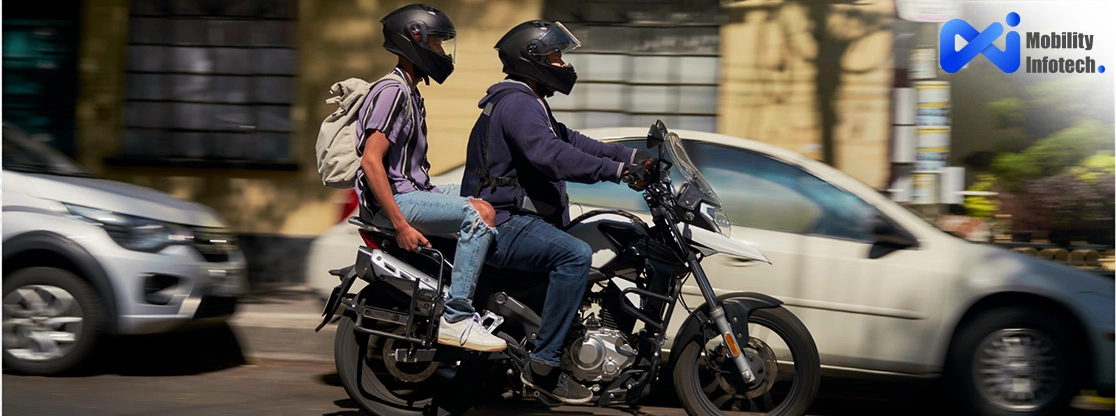
If you launch a standard, car-centric transport app in Lagos, Nairobi, or Accra, you are built to fail. Many ambitious entrepreneurs download a generic digital framework, style it with local branding, and expect to compete with the major transport platforms. They assume that what functions smoothly in London or New York will translate seamlessly into the African urban environment.
Then reality hits on the third mainland bridge or during a rainy evening in Ikeja.
The African transport landscape does not move on four wheels; it runs on two. Recent market research indicates that motorcycles capture over 52% of Africa's entire ride-hailing market share. In regions like West and East Africa, the commercial two-wheeler—known locally as the Okada in Nigeria or the Boda-Boda in Kenya—is not an alternative transport method. It is the primary transport infrastructure.
If you are planning to deploy an Uber clone app in the African market, you have to ask a critical question: Is your software architecture built to handle the operational realities of a multi-billion-dollar two-wheeler economy, or are you trying to force a car app into a motorcycle world?
1. Localized Realities: Why Standard Ride-Hailing Templates Fail in Nigeria
The error most standard Uber clone products make is assuming a ride is simply a ride. In Western markets, a ride-hailing transaction involves a mid-sized sedan, an air-conditioned cabin, a credit card linked to the account, and clear, structured highway mapping.
In Nigeria, urban transport operates under entirely different parameters. Traffic gridlocks can trap standard vehicles in a single spot for hours. For a commuter trying to reach an office in Victoria Island or navigate a busy afternoon in Abuja, cars are often a liability.
Motorcycles offer rapid movement, affordability, and the unique ability to split lanes and navigate complex, unpaved secondary roads.
An effective Uber clone app development strategy for Africa must treat the motorcycle as the foundational asset class. This requires customizing the user experience around the specific habits of two-wheeler passengers and operators, ensuring the software reflects how transit actually moves on the ground.
2. Technical Modifications: Features Your Two-Wheeler Platform Needs
To successfully launch a motorcycle-focused transport platform in Nigeria or the wider African continent, your software framework requires deep, localized backend optimization.
Dual-Purpose Fleet Allocation
Your platform shouldn't force you to launch two separate apps for transport and logistics. Because motorcycle operators maximize their income by carrying passengers during morning rush hours and shifting to document or food deliveries during midday lulls, your backend system must support instant, single-click role toggling.
Off-Grid Mapping and Dynamic Routing
Standard global mapping systems frequently miss the informal shortcuts, community dirt tracks, and local bypasses that motorcycle riders use to avoid major traffic bottlenecks. Your platform needs a lightweight, highly responsive GPS tracking framework that allows riders to navigate fluidly without draining their smartphone batteries or consuming excessive mobile data.
Safety Infrastructures Tailored for Two Wheelers
Safety remains a primary concern for digital motorcycle passengers across Africa. A high-quality transport platform must integrate specific safety verifications directly into the operational flow:
- Helmet and Safety Gear Verification: Driver verification workflows that require operators to upload daily compliance photos before entering the active dispatch queue.
- Real-Time Speed Monitoring: Internal smartphone accelerometer tracking that triggers automated speed alerts to the driver and logs safety infractions on their profile.
- Simplified SOS Triggers: Large, single-tap emergency buttons designed for passengers to activate easily while riding on the back of a moving motorcycle.
3. Financial Integration: Optimizing for Mobile Money and Cash Realities
While international transport systems rely almost entirely on credit card pre-authorizations, the African digital economy runs on localized financial tools. Across Sub-Saharan Africa, mobile money systems handle over 60% of transport transaction volumes.
A commercially viable Uber clone app built for the African market must seamlessly blend these local payment methods directly into the core code architecture:
- Direct Mobile Money Wallets: Deep API integrations with regional payment mainstays like OPay, PalmPay, Paga, and MTN MoMo, allowing split-second fare deductions.
- USSD-Based Offline Booking: Software extensions that enable passengers without active internet connections or smartphones to request a vetted motorcycle rider using basic shortcodes.
- Instant Wallet Cash-Outs: Automated payment clearing gates that let motorcycle operators transfer their digital earnings directly into their personal bank accounts or mobile wallets multiple times a day, ensuring they have immediate cash flow for fuel.
Performance Matrix: Standard App Frameworks vs. Market-Optimized Solutions
Comparing how standard off-the-shelf software stacks match up against locally optimized mobility code highlights exactly why specialized architecture is necessary to capture market share.
| Crucial Operational Feature | Standard Global Uber Clone Apps | Mobility Infotech’s Architecture |
| Primary Vehicle Focus | Built almost exclusively for standard four-wheeled sedans and SUVs. | Native Multi-Modal Support optimized for motorcycles and tricycles. |
| Payment Ecosystem | Restricted to international credit cards and basic cash inputs. | Deep Regional Integration with Paga, MoMo, and custom USSD rails. |
| Dispatch Logic | Uses straight-line distance calculations that ignore local gridlock patterns. | Congestion-Aware Routing tailored for two-wheeler lane splitting. |
| Data Efficiency | Requires continuous, high-bandwidth 4G/5G connections to function. | Low-Data Optimization designed to operate smoothly on older 3G networks. |
| Fleet Monetization | Separates passenger transport completely from courier delivery functions. | Unified Hybrid Flow allowing drivers to shift from rides to deliveries instantly. |
Capture the African Mobility Market with Mobility Infotech
Launching a profitable transport business in Africa requires moving past generic global software copies. To win the market, you need a technology partner who understands that regional mobility is shaped by specific local infrastructure, unique financial ecosystems, and the undeniable efficiency of two-wheeled vehicles.
At Mobility Infotech, we specialize in designing and engineering high-capacity, customized transport and logistics platforms built specifically for emerging economies. Our advanced Uber clone app development solutions move well past basic car-booking templates. We provide you with a powerful, data-efficient, and multi-modal ecosystem ready to manage thousands of motorcycle and car operators simultaneously.
We handle the complex underlying technical architecture—from local mobile money configurations to smart dispatch logic—so you can focus entirely on scaling your fleet operations.
Ready to launch a high-volume transport platform engineered for real African conditions?
Contact the mobility engineering specialists at Mobility Infotech today to request your customized product demonstration and secure your share of the rapid ride-hailing economy.
Frequently Asked Questions
Motorcycles are highly popular because they offer unmatched speed and agility through dense urban traffic congestion, can navigate poorly maintained roads where cars struggle, and provide an affordable point-to-point transport price point for the average daily commuter.
Yes, provided the underlying code is built correctly. Mobility Infotech specializes in creating multi-service mobility architectures. This allows operators to accept a passenger trip during peak morning hours and switch to delivering e-commerce goods or food parcels during the afternoon using the exact same application framework.
Our specialized transport systems utilize high-efficiency data packets and background caching. If a user's mobile data drops temporarily during a journey, the app stores the GPS coordinates locally on the device and syncs the trip details with the central server the moment connection is restored, ensuring accurate fare calculation.
The platform integrates strict safety systems, including mandatory driver background checks, facial verification check-ins, real-time trip sharing for passenger families, and automated speed monitors that flag reckless driving habits instantly.

 Mobility Infotech
 October 21, 2026
BlaBlaCar Clone for Intercity Carpooling: Istanbul-Ankara and Sofia-Plovdiv Routes
On 17 August 2026, TCDD Taşımacılık raised its train fares by 6.45%, tak...
Know More Mobility InfotechOctober 14, 2026
White Label Taxi App vs Uber Clone: Which Should European Taxi Operators Choose?
Since 17 June 2024, every driver working through a ride-hailing platform...
Know More Mobility InfotechOctober 14, 2026
Taxi Dispatch Devices and MDTs: A Hardware Guide for UAE Fleets
Apple says iPhones and iPads are designed for use in ambient temperature...
Know More
Business consultant
Tell us about your vision — Taxi, Carpool, Shuttle, Airport Transfer, Car Rental, or Ride-hailing. We'll show you how fast we can get you live.