
How Taxi Companies in Poland & Belgium Are Replacing Manual Dispatch With Software
 Jackson Scott
 February 4, 2026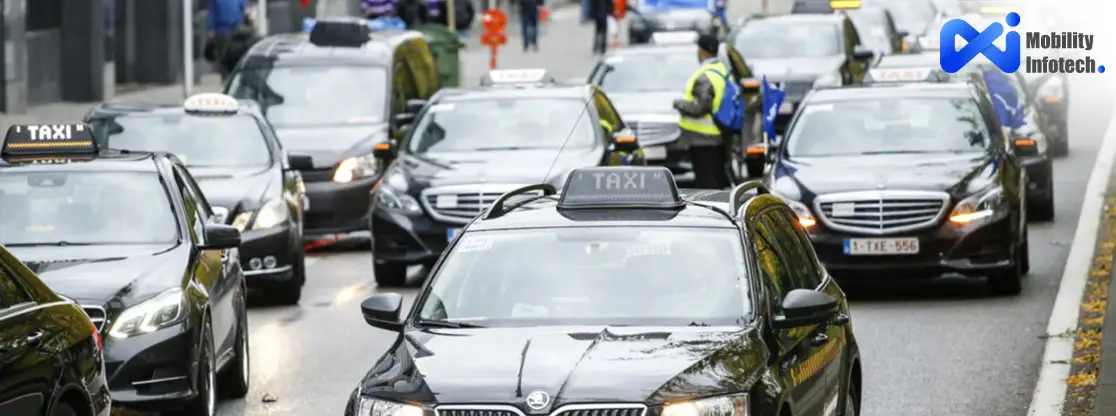
In the competitive landscape of the US and Canadian transportation markets, fleet owners often look toward Europe to spot the next big operational shift. Recently, the focus has landed on Poland and Belgium. In these regions, traditional taxi companies, some decades old, are undergoing a radical transformation driven by modern taxi dispatch software.
The “radio and logbook” era is officially dead. In its place, a sophisticated digital infrastructure is emerging. For North American operators, the story of how Poland and Belgium are replacing manual dispatch with software isn’t just an interesting case study; it’s a blueprint for survival and scaling.
The Breaking Point: Why Manual Dispatch Failed in Europe
For years, taxi companies in Warsaw and Brussels relied on human dispatchers. While this provided a "personal touch," it hit a structural ceiling. As urban populations grew and the demand for instant gratification (the "Uber effect") rose, manual systems began to crumble under three main pressures:
- The Latency Gap: A human dispatcher takes an average of 2–3 minutes to process a call and assign a driver. Modern taxi dispatch software does it in milliseconds.
- The "Dead Mile" Problem: Without GPS-based auto-allocation, drivers often traveled long distances to reach a pickup, wasting fuel and time.
- Scalability Walls: You can’t double your fleet size without doubling your dispatch staff—unless you automate.
How Poland & Belgium Pivoted to Automation
The transition wasn't just about "getting an app." It was a complete overhaul of the taxi management software ecosystem.
Poland: The Efficiency First Approach
In Poland, companies like iTaxi pioneered the shift by integrating deep data analytics. They didn't just automate the dispatch; they used software to predict "hot zones." By analyzing historical data, the cab dispatch system now suggests where drivers should head before the pings even start. This proactive positioning has reduced wait times in Krakow and Wroclaw by nearly 40%.
Belgium: The Quality & Compliance Shift
Belgium’s transition was driven by a need for precision. In cities like Brussels, where traffic is notorious, taxi companies adopted software that integrates real-time municipal traffic data. One major Belgian operator, Taxis Verts, reportedly moved to a 95% auto-allocation rate. This shift didn't just speed up rides; it improved driver retention because the system ensured a fair, transparent distribution of "high-value" trips (like airport runs).
3 Key Software Features Dominating the European Market
If you are looking to upgrade your fleet in the US or Canada, these are the non-negotiables that Polish and Belgian companies prioritized:
1. Advanced Auto-Allocation Logic
Modern taxi dispatch software doesn't just pick the "closest" driver. It considers the driver’s direction of travel, their remaining shift time, and even their vehicle type. This ensures the most logical pairing, reducing "dead mileage" significantly.
2. Multi-Channel Booking Engines
In Poland, users can book via an app, a web portal, or even automated IVR (Interactive Voice Response) phone systems. This ensures that the company doesn’t lose the older demographic that prefers calling, while fully capturing the Gen Z market that refuses to speak on the phone.
3. Real-Time Analytics Dashboards
Fleet owners in Belgium now manage their businesses from tablets, not chalkboards. A robust taxi management software provides a "God’s eye view" of the entire city. You can see revenue per hour, active vs. idle drivers, and customer satisfaction scores in real-time.
Why North American Fleet Owners Should Care
The North American market is currently facing a "driver squeeze." With rising fuel costs and competition from gig-economy giants, local taxi companies must become leaner.
By adopting the European model of high-automation, US and Canadian companies can:
- Reduce Overhead: Lower the need for a massive 24/7 call center.
- Boost Driver Earnings: More trips per hour means happier, more loyal drivers.
- Compete on Tech: Provide the same (or better) user experience as the big ride-sharing apps, but with the local trust of a taxi brand.
Mobility Infotech: Bridging the Gap Between Traditional & Digital
Transitioning from a manual system to a high-tech cab dispatch system can be daunting. This is where Mobility Infotech steps in. We don't just provide "off-the-shelf" code; we build customized mobility solutions that respect your existing business logic while injecting world-class automation.
Our USPs include:
- White-Label Customization: Your brand, your colors, our powerful engine.
- Scalable Architecture: Whether you have 10 cars or 10,000, our software grows with you.
- Global Insight, Local Support: We take the lessons learned from markets like Poland and Belgium and tailor them to the specific regulatory and geographic needs of the US and Canada.
Ready to Modernize Your Fleet?
The manual era is over, but the era of the high-tech taxi company is just beginning. Don't let your competition outpace you with better technology. Take a page out of the European playbook and automate your dispatch today.
Contact Mobility Infotech for a Free Demo. Let’s build the future of your fleet together. Our experts are ready to show you how a custom taxi dispatch system can transform your bottom line.
Frequently Asked Questions
While there is an initial setup cost, the ROI is usually seen within 6–12 months through reduced dispatching labor costs and increased trip volume due to higher efficiency.
Modern taxi management software is designed with "UI/UX simplicity." Most driver apps require only two taps to accept a ride and start navigation, making it accessible even for those who aren't tech-savvy.
Absolutely. In fact, small fleets often see the biggest percentage gain in profit because the software allows a single owner/operator to manage dispatching without hiring extra staff.

 Mobility Infotech
 October 21, 2026
BlaBlaCar Clone for Intercity Carpooling: Istanbul-Ankara and Sofia-Plovdiv Routes
On 17 August 2026, TCDD Taşımacılık raised its train fares by 6.45%, tak...
Know More Mobility InfotechOctober 14, 2026
White Label Taxi App vs Uber Clone: Which Should European Taxi Operators Choose?
Since 17 June 2024, every driver working through a ride-hailing platform...
Know More Mobility InfotechOctober 14, 2026
Taxi Dispatch Devices and MDTs: A Hardware Guide for UAE Fleets
Apple says iPhones and iPads are designed for use in ambient temperature...
Know More
Business consultant
Tell us about your vision — Taxi, Carpool, Shuttle, Airport Transfer, Car Rental, or Ride-hailing. We'll show you how fast we can get you live.