
4-Week Launch Checklist to Build a White-Label Ride-Hailing (Uber-Like) App in New Zealand
 Mobility Infotech
 October 6, 2025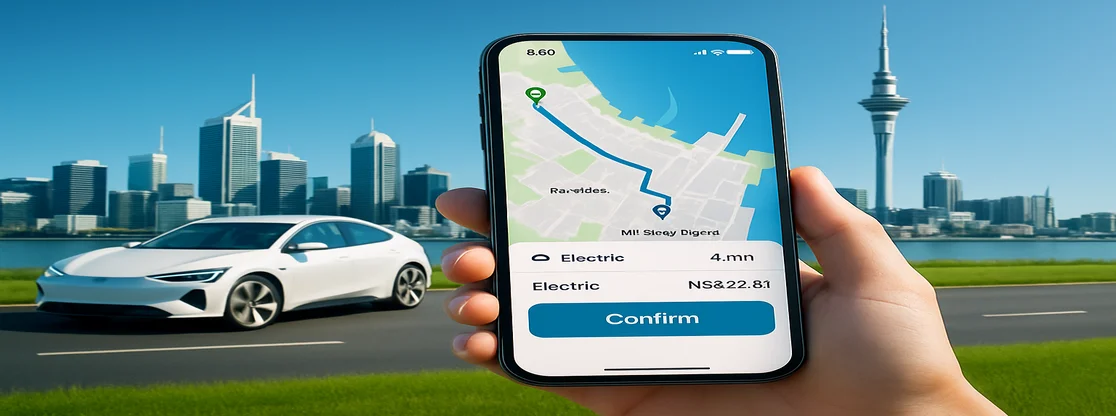
The idea of launching a white-label ride-hailing (Uber-like) app in New Zealand has great potential to be a success because of the country's growing urbanisation and tourism industry. Well, as any idea to become a reality requires proper planning and resources, here's a detailed checklist of the plan and resources needed to make this idea a reality.
New Zealand (Aotearoa) has dense urban corridors (Auckland, Wellington, Christchurch, Hamilton), strong domestic tourism, and a tech-friendly payments environment. All the basics that are the foundation of this on-demand service app launch here.
Now a white-label ride-hailing platform lets you move from idea to launch in weeks, not years, while retaining complete brand control, local pricing, and compliance alignment with NZ law.
Here's the most detailed and practical 4-week structured launch checklist to build, customise, and launch a white-label ride-hailing app that fits the unique regulatory, cultural, and business needs of New Zealand and nearby regions.
Why White-Label Ride-Hailing in New Zealand?
The ride-hailing industry is definitely a growing and flourishing sector globally at present. As more and more people rely on on-demand transport for daily commutes, airport transfers, and city travel. But success in this competitive industry is not easy- it takes a lot of advanced tech, competitive pricing, excellent service, and strategic marketing, all of which have to be there to face the fierce competition from the big names of the industry like Uber, Lyft, and DiDi, who already hold a major share in the market. Here comes the white-label solution, the fastest and most cost-effective way to enter this market for startups and transport businesses. Which makes them, instead of building everything from scratch, get a ready-made platform and add services according to the local needs. Factual aspect:
- Local Adaptation - Unlike Uber, local players can tailor pricing, language, and features to meet the needs of Kiwi customers.
- Regulatory Compliance - New Zealand Transport Agency (NZTA) rules require region-specific features like driver vetting and passenger safety checks. That's easily feasible with a white label Uber clone app.
- Scalability - White-label platforms provide multi-city expansion to Christchurch, Hamilton, Tauranga, and beyond. Get that according to your business perspective.
- Cost Efficiency - Instead of developing from scratch, a white-label solution saves almost 60-70% in cost and 12-15 months of development time.
What makes New Zealand unique (and what your Clone app must respect)
New Zealand's outlook on the ride-hailing industry is shaped by its smaller population, regional spread, and strong emphasis on safety and compliance. These users expect reliable service across both urban hubs, such as Auckland, and regional towns. While regulators enforce strict rules on driver background checks, licensing, and insurance, consider these under a complete red zone if not qualified. Therefore, a white-label on-demand service clone app must respect these local realities.
- Licensing: To operate a commercial small passenger service in NZ, you need a Transport Service Licence (TSL) in the Small Passenger Service Licence (SPSL) class. Drivers must either hold their own SPSL or drive under the authority of an operator's SPSL.
- Driver credentials: Drivers require a Passenger (P) endorsement (for a whole Class 1 licence held for at least 2 years), a fit-and-proper check, and a medical. A driver ID card must be displayed in the vehicle.
- Vehicle safety: Passenger service vehicles (taxis/shuttles/rideshare) need a Certificate of Fitness (CoF); policy settings and guidance recognise regular CoF renewal cycles for passenger service vehicles.
- Work time & logbooks: Small passenger service drivers must comply with NZTA work-time and logbook rules (e.g., restrictions on continuous work time for short fares). Digital logbooks, such as Logmate, are commonly used.
- Consumer & privacy laws: Your platform must comply with the Consumer Guarantees Act and the Fair Trading Act for fair pricing and service quality, as well as the Privacy Act 2020 (13 Information Privacy Principles) for the collection, storage, disclosure, and overseas transfer of personal information.
- GST on rideshare: From 1 April 2024, online marketplaces must collect and remit 15% GST on ridesharing to Inland Revenue. Non-GST-registered drivers may receive an 8.5% flat-rate credit; GST-registered drivers receive a zero-rate supply to the marketplace. Your fare, statement, and payout logic must reflect this.
The 4-Week Launch Plan For a White Label Ride Hailing App Within New Zealand
There are a lot of theoretical facts available in the market, but it's time for some practical knowledge that can actually bring the idea of launching an Uber clone app from concept to soft launch in 28 days. The first step, of course, is to choose a reputable white-label app vendor for all Rider, Driver, and Admin apps.
Week 1 - Compliance, business setup, and local product definition
Objectives: become legally operable; blueprint your localised product.
1) Legal & licensing kickoff (Days 1-2)
- Register a NZ company (or ensure your foreign entity is GST-compliant when supplying services in NZ).
- Begin your SPSL (TSL) process for small passenger services; decide if you'll facilitate drivers (operate your own SPSL and allow drivers to drive under it) or require each driver to provide their own.
- Define driver onboarding standards: P endorsement, Police vetting (via fit-and-proper), CoF, logbook tool, and insurance proof.
2) Risk & insurance (Day 3)
- Engage a broker for commercial passenger transport insurance (private vehicle cover is not enough). Evaluate liability limits and roadside assistance options for fleet resilience.
3) Privacy, data, and consumer protections (Day 3-4)
- Draft a NZ-compliant Privacy Policy (IPP 1-13), with explicit cross-border transfer clauses if using non-NZ data centres; appoint a privacy lead and set a breach-notification playbook.
- Ensure clear pricing disclosure and refund policy aligned with the CGA and Fair Trading Act.
4) Product scoping (Day 4-5)
- Service areas: Auckland central & airport corridors first; add Wellington & Christchurch later.
- Ride types: Economy, Premium/SUV, EV (NZ is EV-progressive), wheelchair-accessible requests (supply-gated).
- Safety features: SOS button (connected to 111), trip-sharing, route deviation alerts, masked numbers, and incident reporting.
- Payments: Cards (Visa/Mastercard), Apple Pay/Google Pay via Stripe, POLi bank transfer (still available in NZ).
- Language: English + optional Te Reo Māori for greetings and key flows.
- Accessibility: Dynamic type, high-contrast map pins, screen-reader labels.
Deliverables by Day 7
- Licensing & compliance tracker, privacy policy draft, driver requirements pack, technical specification (modules, APIs, cloud regions), Go/No-Go checklist for pilot.
Week 2 - Platform customisation, payments & GST, maps, and safety stack
Objectives: brand the apps, wire up NZ payments & GST, build safety and localisation.
1) Brand & UX (Days 8-9)
- Apply your logo, colour palette, Kiwi tone of voice, and microcopy with local idioms (e.g., "Kia ora").
- Provide Te Reo Māori alternatives for high-visibility text (splash, calls-to-action), but keep safety/terms in English for clarity.
2) Maps & navigation (Day 9-10)
- Use Google Maps with NZ traffic layers; verify geocoding accuracy for Auckland Airport pickup/drop-off lanes and popular POIs.
- Tune ETA and pricing with left-hand driving, motorway preferences, and congestion windows during commuting and event peaks.
3) Payments & GST implementation (Day 10-11)
- Integrate Stripe for cards and wallets; test Apple Pay/Google Pay in NZ merchant accounts.
- Add POLi as an optional method (popular with some NZ merchants), noting bank cautions historically; show transparent consent and a help article on bank transfer risks/benefits.
- Implement post-April 2024 GST logic: the marketplace (you) collects 15% GST on rides and remits it to the IR; non-GST-registered drivers receive 8.5% flat-rate credits; GST-registered drivers receive zero-rate supplies from the marketplace. Your statements must reflect "gross fare," GST, commission, and credits.
4) Safety & compliance stack (Day 11-12)
- KYC/KYB: Collect driver ID, P endorsement number, CoF expiry, and SPSL/TSL association; validate formats and expiries.
- Work-time controls: in-app reminders for rest, shifts, and logbook integrations (e.g., deep link to digital logbooks).
- Consumer law UX: fare basis shown before trip; post-trip receipt with GST.
Deliverables by Day 14
- Branded Rider/Driver builds, payments live in sandbox, GST-aware invoice templates, safety features toggled, city polygons and surge rules in Admin.
Week 3 - System testing, driver onboarding at scale, pilot in Auckland
Objectives: run real-world tests; onboard an initial supply pool; complete compliance reviews.
1) Functional & field testing (Days 15-17)
- Happy-path and edge cases: poor GPS, tunnels, building forecourts, split pickups (Newmarket, Viaduct Harbour), airport flows.
- Pricing & GST: vary distance/time surges; confirm GST math on receipts and statements for both GST-registered and non-registered drivers.
- Safety drills: SOS flow to 111 (no actual call in testing), incident reporting, and route-deviation detection.
2) Driver onboarding blitz (Days 16-19)
- Digital funnel: upload driver licence, P endorsement, CoF, vehicle photos, insurance cert, logbook setup proof. Flag expiries and auto-notify.
- Training: NZTA work-time rules (breaks, 70-hour cumulative periods), customer service with visiting tourists, and airport ground rules.
- Supply target: 80-120 active drivers for central Auckland to maintain <6-minute ETAs at launch.
3) Data protection & consumer readiness (Day 19-20)
- Privacy Act gap-check: ensure data-minimisation (IPP 1), purpose binding, breach notification readiness.
- CGA compliance: refunds/remedies path for service failures; clear complaint handling SLAs.
Deliverables by Day 21
- Pilot-ready apps, 100+ drivers pre-approved, test reports (functional, GST, payments), privacy & consumer compliance checklist signed.
Week 4 - Soft launch, brand activation, and expansion plan
Objectives: go live in Auckland; stabilise ops; plan Wellington/Christchurch rollout.
1) Soft launch (Days 22-24)
- Limited geofence: Auckland CBD → Airport corridors, Ponsonby, Mount Eden, Newmarket.
- Monitor: request-to-accept rate, pickup < 6 min, cancellation < 8%, incident rate < 0.2%.
- Begin paid campaigns: search + social with callouts like "Locally owned," "Lower commissions for drivers," "GST-compliant receipts."
2) Rider growth & partnerships (Days 23-26)
- Universities & corporates: AUT, UoA, and business parks for commuter credits.
- Hospitality/events: stadium nights, Eden Park & Spark Arena surge readiness.
- Referral loop: "5th ride 100% off (cap $15)" and driver recruitment bounties.
3) Ops playbook (Days 25-28)
- Driver incentives to balance supply by hour/suburb.
- Customer support: live chat + escalation tree; refunds within 24h.
- Quality controls: low-rating intervention, document re-verification, CoF expiry chaser.
Features for a White-Label Uber-Like App in New Zealand
These are the must-have features in a white label Uber clone app to be legally operated in the market:
For Riders
- Quick booking, live GPS tracking.
- Multi-currency & wallet payments.
- Emergency SOS + NZ Police integration.
For Drivers
- Document management (SPSL, P endorsement).
- Automated earnings reports in NZD.
- Heat maps showing high-demand areas.
For Admin
- City-wise fleet management.
- Compliance & audit reporting.
- Automated driver payout settlement.
Challenges & Solutions in NZ Ride-Hailing
As the app goes live in the market, there will be many challenges, some of which can be foreseen, but some are those that will come as the business comes into its own. Here are some that are usually considered for a clone app after the first launch in the market.
Challenge 1: Strict Driver Vetting
Solution: Automate P endorsement & police vet uploads within the app.
Challenge 2: Competition with Uber & DiDi
Solution: Offer lower commission rates (10-15% vs Uber's 25%).
Challenge 3: Regional Expansion
Solution: Start in Auckland, then add Wellington, Christchurch, and Hamilton with localised marketing.
Conclusion
Launching a white-Label Uber-Like Ride-Hailing App doesn't mean just copying the whole Uber format, but instead it's about localising the service, countering the pain point of users in the market that Uber may not have recognised yet, along with ensuring compliance, and delivering a superior rider and driver experience.
This 4-week launch checklist is like a help book for entrepreneurs that can assist them with quickly setting up operations, onboarding drivers, and beginning to serve passengers in cities like Auckland, Wellington, and Christchurch.
Why white-label ride-hailing solutions are suggested well, it saves businesses time, reduces cost, and positions them firmly against global players at an early stage. New Zealand's growing urban population and tourist influx are a perfect combination to introduce a localised ride-hailing solution.
Frequently Asked Questions
Q.1 What are the estimated startup and monthly costs for a New Zealand taxi or ride-hailing app?
A white-label ride-hailing app in New Zealand can be launched at roughly 60-70% lower cost than a custom-built one.
- Startup costs: NZD 50,000 - NZD 90,000 (includes white-label licensing, branding, compliance setup, and initial driver onboarding).
- Monthly costs: NZD 3,000 - NZD 6,000 depending on server usage, payment gateway fees, driver payouts, insurance, and marketing.
- The key savings come from using a ready-made platform instead of developing from scratch, reducing development time by 12-15 months.
Q.2 How to localise driver onboarding and verification in New Zealand?
Driver onboarding in NZ must follow NZTA-regulated standards:
- Each driver must hold a Passenger (P) endorsement and pass a fit-and-proper check.
- Vehicles need a valid Certificate of Fitness (CoF).
- Operators require a Small Passenger Service Licence (SPSL) or must register under an existing SPSL.
- A white-label platform can automate uploads and validation for these documents (P endorsement, CoF, insurance proof, and logbook), making compliance smoother for both the driver and the operator.
Q.3 What New Zealand regulations apply to ride-hailing startups?
Ride-hailing operators fall under the NZ Transport Agency (NZTA) 's Small Passenger Service framework. They must comply with:
- Transport Service Licence (TSL) in the Small Passenger Service Licence category.
- Work-time and logbook rules (rest periods, digital logbooks such as Logmate).
- Consumer Guarantees Act and Fair Trading Act for fair pricing and service quality.
- Privacy Act 2020 for data collection, storage, and overseas transfers.
- GST 2024 rules: 15% GST must be collected and remitted by the marketplace.
Q.4 How do fare rules, commissions, and fare disclosure work for platforms?
Ride-hailing apps must disclose fares before trip confirmation under NZ consumer law.
- Riders see the fare basis (distance + time + GST) upfront.
- After completion, the invoice must itemise GST (15%), platform commission, and driver earnings.
- Drivers: typically pay 10-15% commission (versus Uber's 25%), improving their income and loyalty.
- Non-GST-registered drivers can receive an 8.5% flat-rate GST credit, while GST-registered drivers get a zero-rated supply from the marketplace.
Q.5 What licensing exactly do NZ ride-hailing companies need?
To legally operate in New Zealand:
- Obtain a Small Passenger Service Licence (SPSL) issued by the NZTA.
- Each driver must have a Passenger (P) endorsement and a fit-and-proper certificate.
- All vehicles must have a Certificate of Fitness (CoF) valid for passenger services.
- Operators must maintain insurance coverage, work-time compliance, and ensure visible driver ID cards in vehicles.

 Mobility Infotech
 October 21, 2026
BlaBlaCar Clone for Intercity Carpooling: Istanbul-Ankara and Sofia-Plovdiv Routes
On 17 August 2026, TCDD Taşımacılık raised its train fares by 6.45%, tak...
Know More Mobility InfotechOctober 14, 2026
White Label Taxi App vs Uber Clone: Which Should European Taxi Operators Choose?
Since 17 June 2024, every driver working through a ride-hailing platform...
Know More Mobility InfotechOctober 14, 2026
Taxi Dispatch Devices and MDTs: A Hardware Guide for UAE Fleets
Apple says iPhones and iPads are designed for use in ambient temperature...
Know More
Business consultant
Tell us about your vision — Taxi, Carpool, Shuttle, Airport Transfer, Car Rental, or Ride-hailing. We'll show you how fast we can get you live.