
Telemedicine in Contrast to Traditional Healthcare: Which Is More Effective?
 Dustin Pratt
 April 26, 2025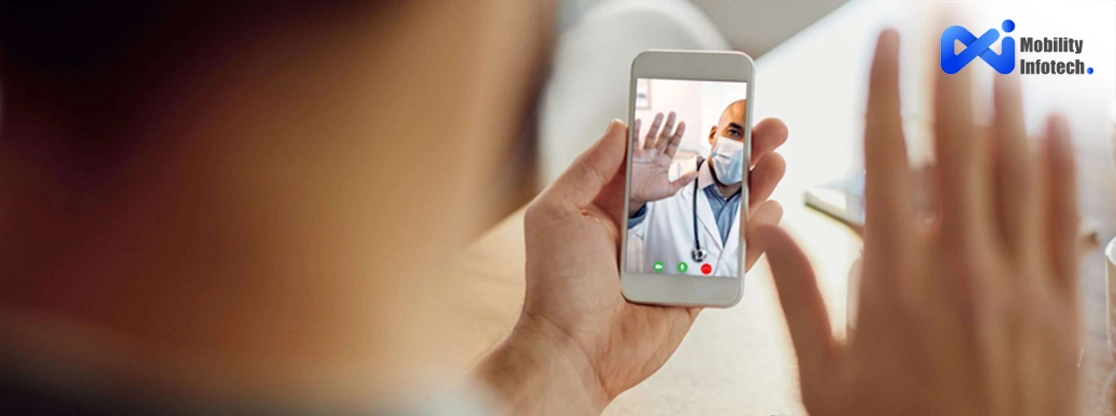
The healthcare sector experiences a fundamental shift because technology develops new methods to deliver medical care and provide access to services. Telemedicine stands as the leading evolution of healthcare delivery through remote digital platforms, which provide healthcare services to patients from a distance. As a leading organization that values innovation, Mobility Infotech recognizes the substantial value of telemedicine app development for the future of healthcare service delivery. The blog evaluates telemedicine alongside traditional healthcare through an extensive comparison that shows which system is better suited for modern times.
Understanding the Paradigms: Traditional vs. Telemedicine
Traditional healthcare has been the foundation of medical practice throughout the centuries because patients receive their care through direct consultations at hospitals and clinics, and physicians' offices. Traditional healthcare depends on physical examination of patients, along with face-to-face meetings between doctor and patient, and well-developed healthcare systems. Through this system, patients built trust, which enabled complete physical tests essential for diagnosing and treating diverse medical conditions.
A telemedicine app development company aims at utilizing information and communication technologies to deliver healthcare across distance boundaries. Medical services under telemedicine cover both remote monitoring and virtual consultation technology, and electronic data systems for managing health records and electronic prescribing. Telemedicine has advanced because of sophisticated mobile applications, which now provide healthcare to patients at unprecedented levels of accessibility and convenience. The establishment of reliable partnerships with telemedicine app development services represents a critical business strategy to create resilient, user-friendly solution platforms.
Accessibility: Bridging the Geographical Divide
Telemedicine offers its users the greatest benefit by overcoming geographical barriers. People who live in rural areas, along with those in underserved locations, face substantial difficulties when it comes to obtaining specialized medical care because of distance and time requirements. The remote healthcare system eliminates geographical challenges by allowing patients to access healthcare professionals through video calls, messaging, and phone consultations. Better accessibility enabled by telemedicine app development practices results in early medical detection combined with appropriate interventions that generate improved treatment results, particularly for treating ongoing diseases, along with mental health conditions. The future success of telemedicine depends on establishing applications that combine easy use with security features.
Traditional healthcare systems require patients to attend in person, which poses a significant challenge for individuals with mobility issues or residents who must travel long distances to access healthcare services. Mobile clinics and outreach programs try to bridge the healthcare gap, but their reach remains limited because telemedicine has broader potential across populations.
Convenience and Efficiency: Streamlining Healthcare Delivery
The combination of telemedicine provides unmatched convenience benefits to healthcare providers and their patients. Patients use virtual appointments to arrange visits from home or workplace settings, thus bypassing the need to travel or sit in waiting rooms while saving costs. The enhanced accessibility helps patients maintain better attendance of their follow-up appointments and practice proactive healthcare. Healthcare providers benefit from telemedicine application development by improving their scheduling systems, cutting administrative workloads, and managing resource distribution better. Professional telemedicine application development leads to workflow optimization, which results in system-wide operational efficiency improvement.
Traditional healthcare delivery requires patients to dedicate major periods of time to travel expenses, alongside waiting times, combined with consultation durations. The need for in-person examinations remains, but remote check-ups and follow-up appointments frequently achieve effective patient care, which saves valuable time.
Cost-Effectiveness: Reducing the Financial Burden
Telemedicine demonstrates great potential to decrease healthcare expenses that affect patients while decreasing expenses for healthcare organizations. The combination of lowered travel expenses with lower overhead costs for virtual consultations, together with early intervention capabilities to prevent more costly complications, results in cost-effectiveness. Patients with chronic diseases benefit from remote monitoring because it enhances their condition management, which decreases their need for hospital admissions and emergency department visits. Organizations that invest in telemedicine application development achieve cost-efficient solutions that serve all healthcare stakeholders.
The healthcare model that depends on physical facilities, together with face-to-face meetings, generates elevated operational expenses. Some medical procedures need these expenses, yet they increase healthcare system expenses, together with individual financial burdens.
Quality of Care and Diagnosis: Addressing Concerns
Traditional patient visits face challenges regarding similar clinical standards and diagnosis precision when compared to conventional in-person healthcare. Modern remote monitoring systems, along with high-definition video conferencing, have improved the capability of healthcare providers to perform complete virtual assessments without direct physical contact. The outcomes of telemedicine services match those of standard care for numerous illnesses, especially in mental health treatment and dermatological conditions (tele dermatology) and the management of ongoing diseases. The development of secure telemedicine applications with quality audio-visual features and electronic health record integration becomes the fundamental success factor in these systems.
Healthcare practitioners in traditional settings can perform detailed physical tests and operate specialized equipment for diagnosis in their facilities. The practice of traditional healthcare encounters diagnostic errors despite its fundamental nature.
Mobility Infotech: Empowering the Future of Healthcare through Telemedicine
Mobility Infotech, as a leading telemedicine app development company, works to build dependable telemedicine solutions that empower health providers and improve patient care quality. Our experience in telemedicine application development enables us to build security-focused platforms that create convenient interfaces for virtual sessions and remote healthcare management. As a telemedicine app development provider, we focus on creating solutions that exceed quality standards and meet all necessary security requirements and healthcare protocols.
Conclusion: Embracing the Potential of Telemedicine
Telemedicine continues to be important, yet traditional healthcare serves as the foundation of medical practice due to its advantages that include accessibility, cost-effectiveness, efficiency, and convenience. While issues regarding quality of care and patient-physician relationships are valid, ongoing technological advancements and the implementation of best practices aim to address these problems. Healthcare systems will probably shift to unified delivery models that integrate telemedicine capabilities with established healthcare practices. Through telemedicine app development, we can establish a healthcare system that delivers accessible, affordable, patient-oriented care to every individual. The leaders at Mobility Infotech lead technological advancements in telemedicine application development while defining the future of healthcare service delivery.
 Mobility Infotech
 September 3, 2026
Uber Clone App Development UAE: Features, Cost & Time-to-Market 2026
Investing in Uber clone app development UAE in 202...
Know More Mobility InfotechAugust 31, 2026
Lyft Clone vs Custom Taxi App Development: What UAE Startups Should Pick
Dubai moves fast. Abu Dhabi moves faster on regulation. Somewhere betwee...
Know More Mobility InfotechAugust 28, 2026
Taxi App Clone A Smart Entry Point for Nigeria's Tier-2 Cities
It is 9 PM in Enugu. A nurse leaving her shift in Independence Layout ne...
Know More
Business consultant
Tell us about your vision — Taxi, Carpool, Shuttle, Airport Transfer, Car Rental, or Ride-hailing. We'll show you how fast we can get you live.