
White Label Taxi App Poland: How Warsaw Startups Launch Bolt Alternatives
 Mobility Infotech
 September 12, 2026
In June 2024, platforms in Poland spent a Sunday night deleting drivers from their own apps. Thousands of them. By Monday morning, those drivers were no longer legally allowed to work.
That single night reshaped the Polish market more than any funding round ever did. It also handed local founders an opening that did not exist before.
Poland Rewrote the Rulebook, and Most Founders Missed It
Anyone planning a white label taxi app Poland riders will trust has to start with the law, not the app. Poland's amendments to the Road Transport Act, widely called the ‘Uber Lex’ reforms, took effect in early October 2024 and pulled ride-hailing under traditional taxi regulation.
The requirements are not light. Every driver now needs:
- A Polish driving licence, mandatory from 17 June 2024, with foreigners only eligible to apply after 185 days of residence in the country.
- A city-issued taxi licence, which means a Warsaw licence covers Warsaw, and neighbouring municipalities each require their own separate permit.
- OC TAXI insurance, a criminal record check, and medical and psychological tests, all of which are checked rather than self-declared.
Existing drivers were given until April 2025 to bring their paperwork in line. Many did not.
So does that make Poland a closed market? Quite the opposite. It made it a market where compliance is the moat, and where a platform that manages licences properly has a genuine advantage.
What a Warsaw Launch Actually Involves
Warsaw is not one licensing area. It is a city licence plus a ring of surrounding municipalities, each issued separately, which means a driver can legally take one ride and not another depending on where it starts.
Any serious taxi app Warsaw operators build has to handle that at the dispatch level. If the system offers a driver a ride they cannot legally accept, the operator has a compliance problem, not a UX problem.
There is also the fleet partner layer. Most Polish drivers work through intermediary companies that supply the vehicle and the business registration, since both are out of reach individually, and take a cut in return.
Vehicles matter too. Most cities require a model year of 2015 or newer, with a few smaller ones accepting 2013 or 2014.
Why Drivers Are Willing to Try Something New
Here is the part that makes Bolt an alternative Poland drivers actually find realistic rather than wishful.
In April 2025, Uber and Bolt drivers protested in Warsaw, Poznań, and the Tri-City area. Their complaints were specific, not vague.
- Drivers demanded a minimum net payment of PLN 12 per ride and a minimum of PLN 3 per kilometre, plus higher night rates.
- Fuel, repairs, and insurance sit with the driver, while commission rates and fares had not moved in line with inflation.
- Platform commissions were a central grievance, echoed in employment-law commentary on the same strike.
A new platform that competes on commission rather than on features has a real story to tell these drivers. That is a business decision, not a technical one, but the software has to support it.
Belgium Plays by a Different Rulebook Entirely
Belgium deserves separate treatment, because Brussels solved the same problem in almost the opposite way. Rather than folding platforms into taxi rules, it built two categories.
Under the Brussels Taxi Plan, traditional "standing taxis" keep bus lanes and taxi ranks. Platform-based "street taxis" may only take bookings through an app, with no street hails and no use of reserved waiting areas.
- Street taxi licences rose from 1,425 to 1,825, while classic taxi licences stayed capped at 1,425.
- The regulated rate moved to $2.30 per kilometre, a change the Belgian Taxi Federation said many meters were not yet configured to handle.
- Licences became non-transferable and assigned to individual drivers, ending years of speculative trading in taxi permits.
Laurent Pantusa, Country Manager for Ride-Hailing at Bolt, welcomed the reform's intent, saying the sector needed "a stable legal framework that will allow us to operate in full transparency".
For founders, the lesson is simple. Poland and Belgium both regulate hard, but they regulate differently, so licence logic cannot be hard-coded for one country.
What the Platform Has to Do
Can one system genuinely serve Warsaw and Brussels? Yes, provided licence zones, driver document checks, and fare rules are configurable per city rather than baked into the code.
A workable white label taxi app Poland founders can operate needs these pieces from day one.
- Licence-aware dispatch, so a driver is only offered rides that start inside a municipality where their taxi licence is valid.
- Driver document management, tracking licence expiry, insurance, and medical certificate dates before they lapse rather than after.
- Configurable commission settings, letting a founder undercut incumbent rates deliberately instead of copying them.
- Real-time GPS tracking, giving riders and dispatchers live visibility and creating the trip record regulators increasingly expect.
- Multi-city configuration, running Warsaw, Kraków, or Brussels from one admin panel with separate rules and pricing.
The Records Layer Founders Underestimate
A serious ride-hailing startup Poland regulators will not challenge clean, exportable trip and driver records. Since 2021, Polish rules have allowed the mobile app itself to settle trips, removing the need for a legalised taximeter, which puts the burden of proof squarely on the software.
Where Off-the-Shelf Platforms Fall Short
Most clone scripts sold online assume a single-city, surge-priced, loosely licensed market. That assumption fails immediately in Poland, where a driver's legal right to accept a ride depends on which municipality it begins in.
Mobility Infotech builds white-label ride-hailing platforms around fleet realities like these, with a branded rider app, driver app, real-time GPS tracking, fare and payment management, and an admin dashboard with analytics. Cloud or on-premises deployment is available, which matters for operators handling EU data rules.
For founders comparing branded cab app Poland options, the practical question is whether the platform treats licensing as configurable data or as an afterthought.
The Bottom Line for Founders
Poland did not make ride-hailing harder for everyone equally. It made it harder for platforms that treated driver licensing as paperwork and easier for those that treat it as core product logic. Belgium is heading in the same direction on a different road, with its own categories, caps, and fare rules.
Founders building a white label taxi app Poland and Belgium should start from software that handles licence zones as settings, not exceptions. That is the case Mobility Infotech puts to operators weighing a long custom build against a faster, tested launch.
The regulators have already decided how this market works. The platform just has to keep up with them.
Frequently Asked Questions
A white label taxi app is a ready-made ride-hailing platform that can be launched under a startup's own brand. It typically includes rider and driver apps, dispatch tools, payments, GPS tracking, driver management, and an admin dashboard.
Polish ride-hailing platforms need to account for driver licensing requirements and local operating areas. A taxi app should therefore verify driver documents and use licence-zone rules when assigning trips, helping operators avoid offering rides to drivers who lack the required permissions.
Yes. A platform can support multiple cities if its administration system allows separate licensing, pricing, service areas, and operating rules. This lets an operator manage Warsaw, Kraków, and other locations without creating a completely separate platform for each city.
Startups should prioritise licence-aware dispatch, driver document management, GPS tracking, automated payments, configurable commissions, trip records, fare management, and multi-city controls. These features help operators manage daily bookings while adapting the platform to Poland's regulatory and operational requirements.
A new platform does not need to copy Bolt feature for feature. It can attract drivers through better commission structures and attract riders through reliable service, local pricing, faster support, and a strong brand. Flexible software helps operators adjust these strategies as the business grows.

 Mobility Infotech
 September 12, 2026
Taxi Dispatch Software Turkey 2026: Istanbul, Ankara and Izmir Operator Guide
Running a taxi fleet in Turkey is no longer a paperwork job. Meters now ...
Know More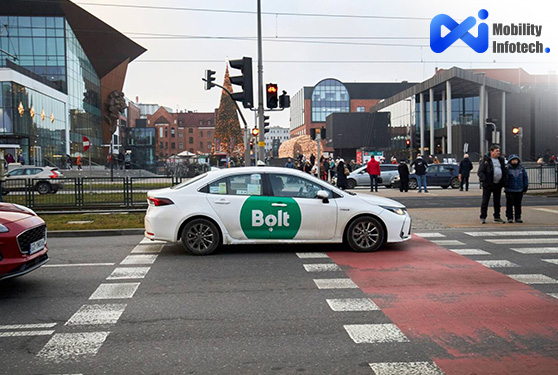 Mobility InfotechSeptember 12, 2026
White Label Taxi App Poland: How Warsaw Startups Launch Bolt Alternatives
In June 2024, platforms in Poland spent a Sunday night deleting drivers ...
Know More Mobility InfotechSeptember 9, 2026
How Airport Transfer Operators in Dubai Reduce No-Shows with Smart Software
A driver sits outside Terminal 3 for forty minutes. The pas...
Know More
Business consultant
Tell us about your vision — Taxi, Carpool, Shuttle, Airport Transfer, Car Rental, or Ride-hailing. We'll show you how fast we can get you live.